



Bull Market & Bear Market: What they mean and how to capitalise on them
In March 2025, 94-year-old Warren Buffett captured the attention of the financial world when he significantly reduced his stake in Apple shares and amassed a record-breaking reserve of $334 billion in liquidity. His decision was widely praised for its strategic vision when the market declined shortly afterwards. While many investors suffered losses, Buffett was able to capitalise on future opportunities.
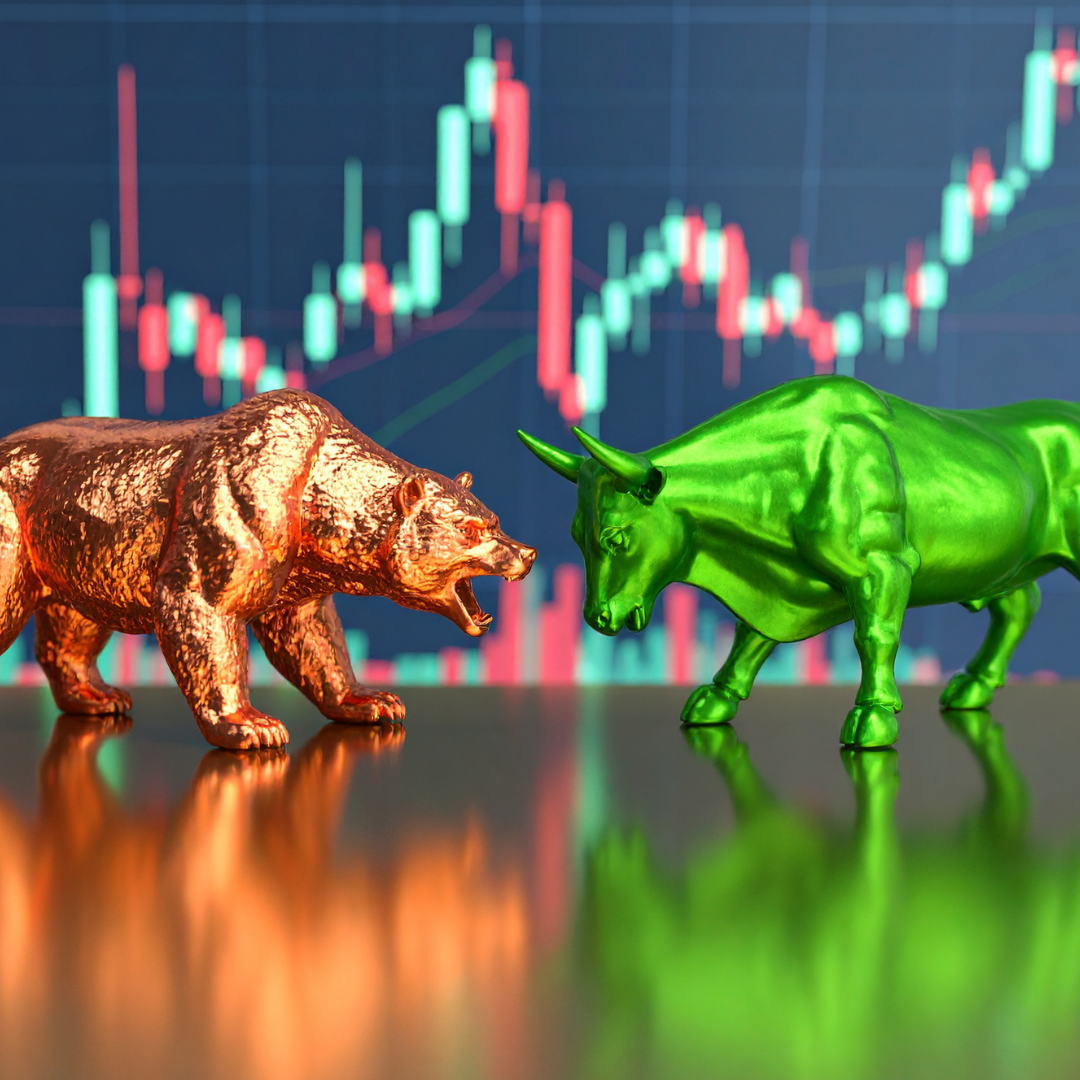
This move demonstrates his profound grasp of market cycles, prompting us to consider the 'peaks' and 'troughs' characteristic of bull and bear markets. Mastering these concepts is essential if you want to navigate economic fluctuations with confidence and make informed investment decisions. In this article, we explore the meaning of each cycle, its distinctive characteristics, and practical strategies for maximising returns in both phases, with the support of Banco Carregosa.
What is a Bull Market?
A bull market is characterised by a prolonged period of growth in financial markets, with sustained increases in asset prices, such as those for shares, bonds, and indices. This scenario reflects a climate of investor confidence, which is driven by factors such as robust economic indicators and strong corporate performance.
Bull and Bear Market Cycles
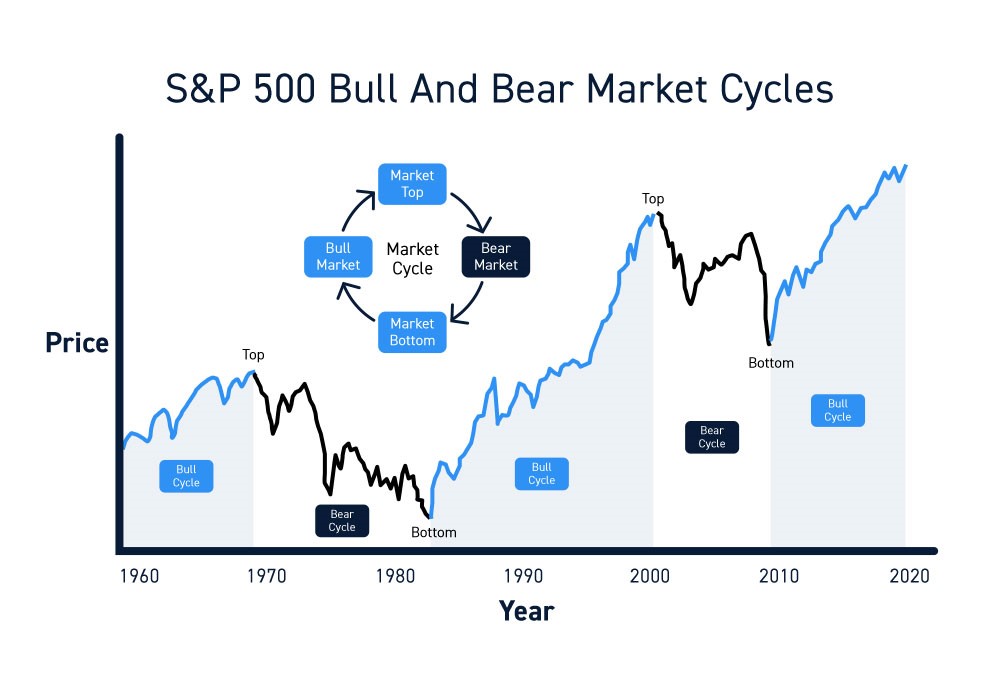
Source: centerpoint
In a bull market, the expectation of continued price rises attracts more capital to the market, creating a virtuous cycle of optimism and growth. Such periods can last for months or even years, typically coincide with phases of economic expansion, and present opportunities for investors looking to maximise their returns.
O que causa um Bull Market?
A bull market is the result of a combination of economic, financial and behavioral factors that create a virtuous cycle of appreciation. The main drivers are:
• Economic growth: GDP expansion, increased productivity, employment and consumption create a favorable environment for investment;
• Expansionary monetary policies: these policies are initially characterized by low interest rates and abundant liquidity, which stimulate credit and demand for assets offering a higher return, such as shares. However, expansionary policies are rarely present in the latter phase of a bull market. On the contrary, restrictive policies are common and often dictate the end of the bull market;
• Positive corporate results: increased profits and improved profitability of companies boost investor confidence;
• Optimistic market sentiment: positive expectations about the future drive demand for assets and lead to new price increases;
• Technological innovation and structural transformation: new sectors and trends, such as artificial intelligence and energy transition, create growth opportunities and attract capital.
What is a Bear Market?
Um Bear Market caracteriza-se por uma fase prolongada de desvalorização nos mercados financeiros, com quedas contínuas e significativas – geralmente superiores a 20% face aos picos anteriores – nos preços de ativos como ações, obrigações A bear market is characterised by a prolonged period of financial market devaluation, with continuous and significant falls in asset prices such as those of stocks, bonds or indices, usually by more than 20% from previous peaks. This scenario reflects an environment of pessimism driven by factors such as an economic slowdown, rising unemployment, falling corporate profits and restrictive monetary policies, such as interest rate rises.
Investor confidence wanes, leading to a predominance of selling, which is often driven by the fear of further losses. As with a bull market, a bear market can last for months or even years, depending on how bad the crisis is and how the economy or politics react to it. Nevertheless, bear markets tend to be much shorter than bull markets, much like recessions and periods of economic growth. To protect your assets and spot potential opportunities, it is vital to grasp these dynamics, with the support of Banco Carregosa’s experts.
What causes a Bear Market?
A bear market is the result of a combination of economic, financial and psychological factors that put pressure on the markets. A loss of investor confidence can trigger a chain reaction of selling, which amplifies falls in a domino effect. The main drivers are:
• Economic recession: a decline in GDP, rising unemployment and reduced consumption affect company performance and the markets;
• Rising interest rates: higher interest rates make borrowing more expensive, which discourages investment and holds back economic growth;
• Financial crises: bank crashes, speculative bubbles or large-scale bankruptcies generate instability and panic;
• Political or geopolitical uncertainty: conflicts, government instability and trade tensions increase the perception of risk;
• Corrections after prolonged bull markets: markets with excessive valuations tend to correct themselves, by entering a downward cycle;
• Generalised pessimism: the fear of losses drives sales and perpetuates the cycle of devaluation.
What should you do during a Bull Market?
Although a bull market offers opportunities for growth, it takes discipline to avoid becoming overconfident. The key to success is to capitalise on asset appreciation while keeping a tight grip on risk management and strategic allocation. With the support of Banco Carregosa, you can learn about four strategies for taking advantage of this cycle:
Never try to guess the highs
It is better to ride the wave of a bull market than to try to guess when the highs will be reached. However, it is important to be aware of potential excesses, as the market becomes more vulnerable and any further disruptive event could spell the end of the bull market. Therefore, it is crucial to monitor both the market and the macroeconomic situation.
Identify the sectors that are growing fastest
Some investors strengthen their positions in sectors with high growth potential, such as technology and renewable energies, as these sectors often drive bull markets. The GoBulling platform provides access to specialised ETFs and thematic investment funds, enabling diversification within these areas while offering liquidity and exposure to long-term trends.
Take advantage of technical corrections
Even thriving markets experience the occasional downturn. Keep a watchlist of high-quality assets and consider entering or reinforcing positions at attractive prices, while maintaining a long-term outlook. Banco Carregosa’s trading platform offers real-time quotes and market analysis to help you identify such opportunities.
Periodically rebalance your portfolio
An increased appreciation can cause the weighting of shares in a portfolio to change, thereby unbalancing the risk profile. Review your entire portfolio and analyse whether adjusting the share allocation would be sensible in order to secure gains and ensure that the strategy remains aligned with your objectives.
Anticipate economic cycles
In an advanced bull market, signs such as high inflation, rising interest rates and deteriorating corporate performance may indicate an impending market reversal. Monitor these indicators and consider gradually adjusting your portfolio to protect your assets. Banco Carregosa’s market report can help you make informed decisions.
What should you buy in a Bull Market?
In a bull market, optimism leads to steady asset appreciation, creating opportunities to maximise returns. To make the most of rising investments while managing risk, choosing the right investments requires strategy and balance. The following four asset categories are ideal for this phase:
Growth Stocks
In bull markets, innovative companies in sectors such as technology and biotechnology often outperform the market thanks to investor confidence. These stocks offer high growth potential, making them an attractive choice for investors looking for long-term returns.
Cyclical sectors
During economic expansions, when people have more money to spend, industries such as consumer discretionary, tourism, property and automobiles tend to thrive. Investing in stocks or funds from these sectors can help you capitalise on this growth.
Targeted index funds (ETFs)
Thematic ETFs, which focus on areas such as renewable energy, technology and artificial intelligence, offer diversification and liquidity by capitalising on specific bull market trends. They are a practical option for investors seeking balance.
Mid-cap and small-cap stocks
In the past, it has been observed that smaller companies tend to experience higher growth rates in a bull market, albeit with greater volatility.
What should you do in a Bear Market
In a bear market, investors tend to prioritise protecting their money over making it grow. They want to protect their assets and prepare for future opportunities. Having well-defined strategies in place can help to protect investments and prepare for recovery. Find out about five practical steps for navigating this cycle:
Reduce exposure to more volatile or cyclical sectors
Cyclical sectors such as tourism, construction and early-stage technology tend to be hit harder during economic downturns. One way to minimise volatility is to reposition the portfolio towards defensive sectors, such as healthcare and essential consumer goods, or towards companies with resilient business models and strong balance sheets.
Strengthen the resilience and liquidity of safe haven assets
Government bonds tend to appreciate in value during periods of falling interest rates. This was the case from 2000 to 2003. During this period, in addition to falling interest rates, the dot-com bubble burst, the events of 11 September, and the Iraq War, shares fell while government bonds rose significantly. The same situation occurred again from 2007 to 2009.
Build up or increase liquidity
Freeing up liquidity by reducing some weaker positions or consolidating past gains allows you to take advantage of future opportunities, such as capital increases or assets traded at a discount.
Invest in undervalued assets in stages
Bear markets often result in the excessive devaluation of shares or funds with solid fundamentals. Adopting a long-term approach and investing in these assets gradually allows you to take advantage of more attractive recovery prices.
Rely on professional support
In periods of uncertainty, rash decisions can jeopardise your assets. Seeking specialised advice can help you interpret market signals and maintain discipline. The GoBulling platform provides market analysis and real-time information, while Banco Carregosa’s specialists offer personalised guidance.
What should you buy in a Bear Market?
Although a bear market can generate uncertainty, it is a unique opportunity for prepared investors to acquire quality assets at attractive prices. Many hesitate, but well-founded strategies allow you to prepare yourself for the recovery. Here are six asset categories to consider during this phase:
• Blue Chips: large-cap companies with strong balance sheets and a proven track record of resilience, particularly in the consumer goods sector, tend to weather crises better and recover quickly, offering long-term value;
• Index funds (ETFs): buying ETFs that track major market indices, such as the S&P 500 or the MSCI World Index, offers diversification and enables you to benefit from general market recovery without having to select specific stocks;
• Defensive sectors: companies in sectors such as health, food, energy and essential services maintain stable demand even during periods of recession, thereby ensuring greater stability of the investment portfolio;
• Gold and precious metals: traditionally, assets such as gold are considered a safe haven during periods of market volatility, helping to balance a portfolio and protect against economic uncertainty;
• Investment-grade bonds: these debt securities, issued by solvent governments or companies with a high credit rating, offer fixed returns and stability, thereby minimising exposure to market risks;
• Liquidity: in a bear market, keeping capital available is a powerful strategy. Having liquidity enables you to seize investment opportunities, such as buying undervalued assets or increasing your capital, at favourable prices.
Reading suggestion

The new book "Mercados e Economia nas Mãos da IA” (Markets and Economics in the Hands of AI), by Paulo Monteiro Rosa, Senior Economist at Banco Carregosa, is essential reading for anyone looking to understand bull and bear markets in the age of artificial intelligence. Consisting of 120 articles published in the specialised national press throughout 2024 and the first quarter of 2025, the book analyses the valuation of the stock markets between 2021 and 2025. Learn more about it here.
Make the most of Bull and Bear markets with Banco Carregosa
Having the right guidance is essential for making well-informed decisions in a bull or bear market and ensuring that your investments align with your long-term goals. No Banco Carregosa, we understand the importance of personalised, strategic investment management. Contact us to find out how we can help you to safely protect and diversify your portfolio.