



Dependence on Magnets: The West's efforts to break China’s monopoly on rare earth elements

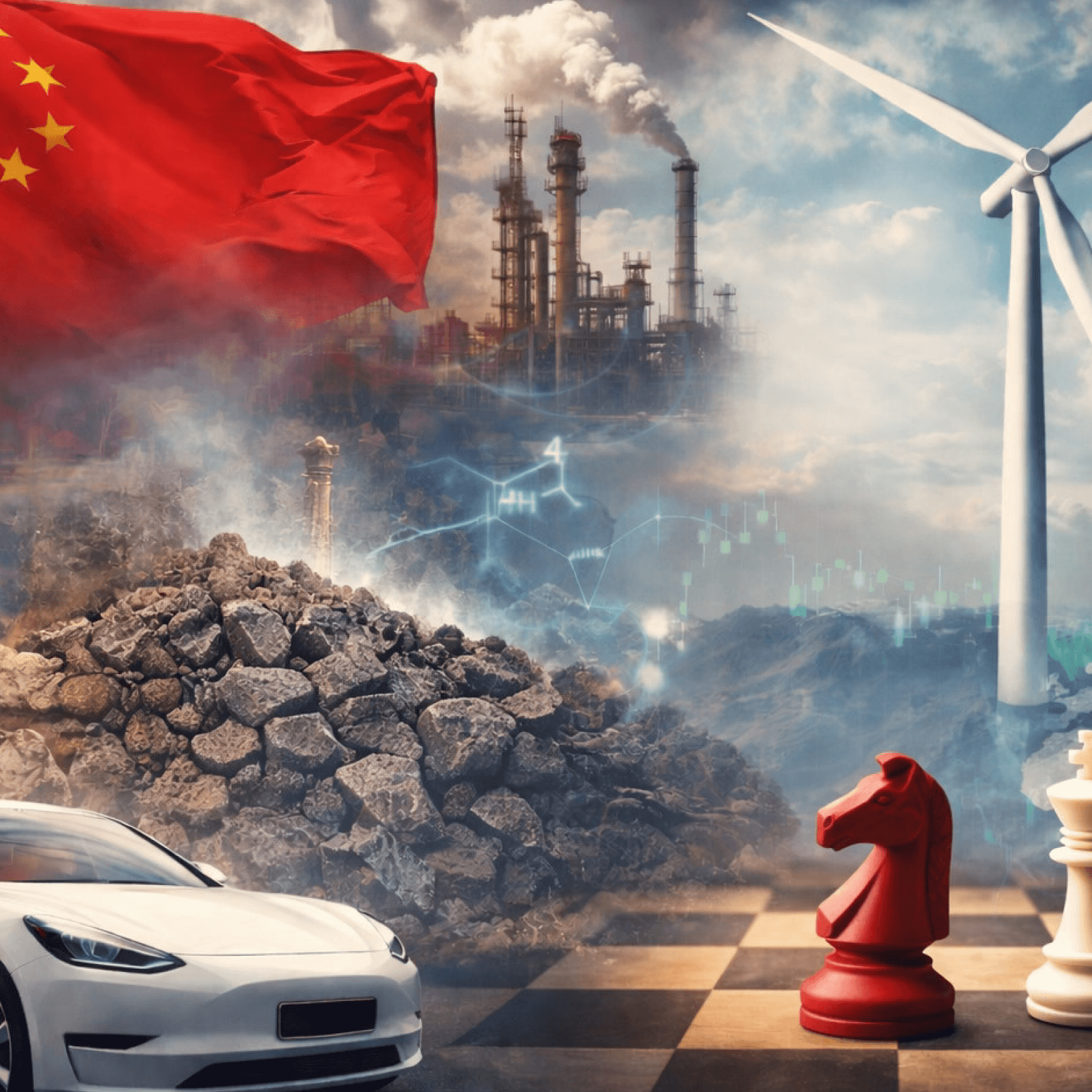
At the heart of both the digital economy and the energy transition lies a set of 17 distinct metallic elements known as rare earths. These elements are far more strategically important than they are publicly recognised. Although they do not appear in newspaper headlines alongside oil and gold, they do power the engines of the 21st century. They are used in everything from F-35 fighter jets and wind turbine magnets to electric vehicles (EVs) and consumer electronics and defence systems. An F-35 incorporates around 400 kg of these materials in its onboard electronic systems. A 3 MW wind turbine uses permanent magnets containing tonnes of neodymium, praseodymium, and dysprosium or terbium additions to tolerate high temperatures. A typical electric vehicle (EV) carries smaller, yet critical, amounts for high-efficiency motors.
However, the term "rare earth” is misleading. In fact, several of these elements are relatively abundant in the Earth’s crust. Their "rarity” stems from the technical difficulty and environmental cost of extracting them in low concentrations, and above all, separating them. This is a multi-step chemical process, and the similar properties of these elements mean that refining is slow, energy-intensive and highly polluting.
Neodymium Price
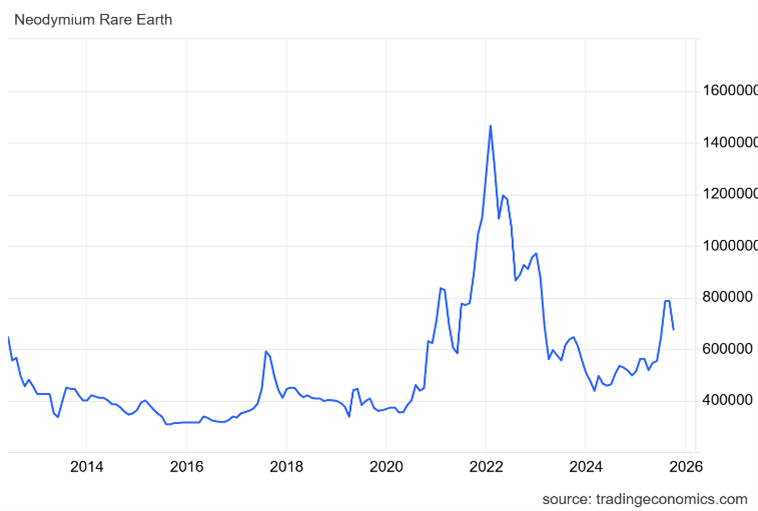
Figure 1: Neodymium – a barometer of tension in the permanent magnet supply chain
Source: TradingEconomics
This is where the vulnerability begins. Over the past three decades, China has focused its industrial capacity on the stages with the highest added value. This has allowed it to convert the geology and chemistry of the process into a geopolitical lever. The West is now attempting to establish an alternative supply chain to reduce its reliance on a supplier that is not afraid to exploit its market power for foreign policy purposes.
The value chain and bottlenecks
The rare earth value chain can be broken down into three stages. In the upstream stage (mining and concentration), ore (such as bastnasite, monazite and ionic clays) is extracted, ground and concentrated. This stage has the lowest margin, but nothing else can happen without it. The real bottleneck arises in the midstream stage (separation and refining) where hundreds of solvent extraction cycles are required to isolate high-purity oxides (e.g. Nd2O3 and NdPr mixtures). This process often involves managing radioactive by-products (thorium and uranium). Finally, in the downstream stage (metallurgy, alloys and manufacturing), these oxides are converted into metals and permanent magnets, notably neodymium-iron-boron (NdFeB), which is the benchmark material for electric motors and generators.
Chinese dominance increases as we move up the chain. Figure 2 illustrates their significant leadership in extraction, but, more importantly, their almost total dominance in chemical separation and magnet production. This asymmetry explains why simply owning reserves is not enough. Without the chemical process, licensing, capital and industrial scale, the ore inevitably ends up in the hands of those who dominate the midstream segment. For years, the Mountain Pass mine in the United States exported concentrate for refining in China. This is evidence that power resides in the phase where risk, capital expenditure (CAPEX) and specialisation are highest.
Regional composition of the supply chain (IEA)
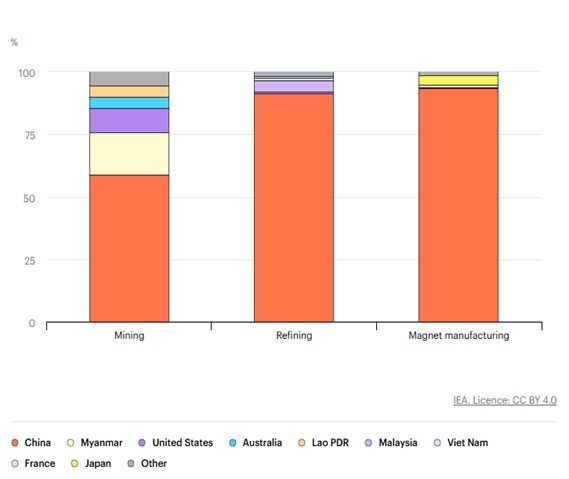
Figure 2: From mine to magnet: China's share increases where value is highest
Source: IEA
In practical terms, achieving resilience for investors and policymakers requires more than just opening mines. It also involves doubling down in the West on the less visible but more critical parts of the system: refining and the magnet chain. These areas are where intellectual property, economies of scale, and clusters of specialised suppliers are found.
Geographical concentration of refining until 2040 (IEA)
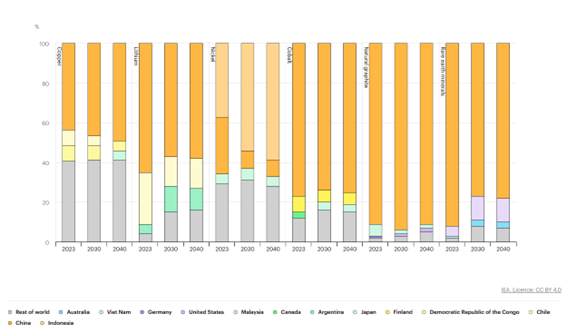
Figure 3: Concentrated refining – the three largest countries dominate the chemical heart of the chain
Source: IEA
New frontiers: Brazil, Africa, and Southeast Asia
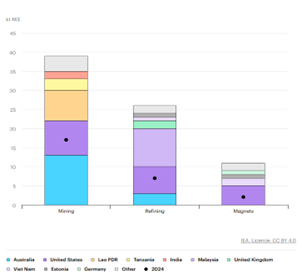
Figure 6: New supply map: projects outside China entering the decade
Source: IEA
A geopolitical weapon: when rare earths become coercion
It is clear from what has happened recently that control of this chain can be used as a means of exerting pressure. Even partial or temporary export and licensing restrictions can cause price shocks and force downstream industries, such as automotive and electronics, to redesign specifications, accelerate the adoption of technological alternatives, such as magnet-free motors, or revise production plans. The result was enlightening: close dependencies at critical points can lead to operational and strategic risks in times of tension.
Impact of export controls on prices (IEA)
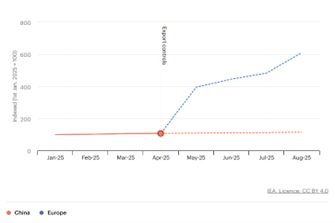
Figure 4: Regulatory shock, price shock: how export controls reverberate through industry
Source: IEA
The lesson for markets and regulators is twofold. First, just-in-time supply chains require inventories and long-term contracts for critical materials. Second, geographical diversification and public co-financing during periods of technological risk are necessary, though not sufficient, conditions for reducing vulnerability. This brings industrial policy back to centre stage.
The Western players and the "mine-to-magnet” reconstruction
The United States' response has a face: MP Materials. By reactivating the Mountain Pass mine in California and implementing a "mine-to-magnet” strategy, the company aims to complete the production cycle on American soil, from concentrate (Stage I) and oxide separation (Stage II) to NdFeB alloys and magnets (Stage III), with a factory in Texas and long-term supply contracts with the automotive industry. The deciding factor is not just engineering, but also institutional architecture, in the form of public-private partnerships. These partnerships, the Department of Defence co-finances projects and provides support for separating heavy elements. Multi-year agreements are now in place to stabilise demand and reduce price risk and cyclicality, which have previously made these projects unviable.
DoD–MP Materials Partnership
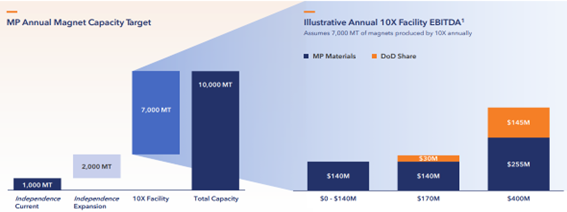
Figure 5: United States – anchor contracts and co-financing reduce midstream risk
Source: Investor Relations MP
Meanwhile, Lynas Rare Earths has established itself as a "proven” alternative to China. It has been the only significant producer of separated oxides outside China for years, operating the Mt Weld mine in Australia and a large separation plant in Malaysia. With the backing of the US Department of Défense for heavy metal capacity, Lynas is expanding its operations in the United States and transferring key processes to Kalgoorlie, Australia. This expansion is vital for applications requiring high thermal tolerance, such as military equipment and high-end electric vehicles.
These initiatives have one thing in common: where the learning curve is long and price cycles are volatile, the market alone tends to underinvest. Take-or-pay contracts, concessional financing, tax incentives and coordination with demand from the defence and automotive sectors bridge the gap between financial viability and strategic interest.
New frontiers: Brazil, Africa, and Southeast Asia
The process of diversifying the raw materials is underway. Brazil has significant reserves and new projects, such as Serra Verde, are entering commercial production. Several assets in Africa are expected to become operational during this decade, including those in Tanzania, Malawi, Angola and South Africa. Together, these could potentially supply a significant proportion of mined PrNd by 2030. In Southeast Asia, Vietnam has reserves comparable to Brazil’s and the industrial infrastructure to attract investment in processing. Malaysia is already part of the supply chain via Lynas.
The challenge lies in transforming geology into system value. Without local midstream facilities or firm agreements with Western refineries, some of this material will continue to be sent to existing Asian clusters. The good news for the West is that the expansion of refining capacity in the United States and Australia is creating a credible alternative to non-Chinese offtake contracts. This is a necessary condition for establishing a more diverse supply chain and reducing risk concentration.
Accelerating demand and public policy in the West
The demand for rare earth magnets is expected to increase as transport becomes more electrified and wind power expands. The latest projections indicate sharp growth until the mid-2030s. However, there is a risk of shortages if the supply of mines, separation processes and magnets does not increase in time. In its Global Critical Minerals Outlook 2025 report, the International Energy Agency (IEA) highlights the vulnerability of the energy transition to critical material shortages. The IEA recommends implementing risk mitigation policies throughout the supply chain, including diversification, transparent inventory management, standardisation and recycling.
What China's magnet exports represent
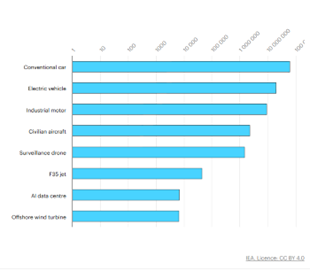
Figure 8: Tonnes in products: magnitude of magnet exports converted into real items
Source: IEA
In terms of policy, the US employs a combination of the Defence Production Act, financing and anchor contracts to "repatriate” every stage of the process, from Californian concentrate to Texan magnets, thereby aligning national security with green industrialisation. The Critical Raw Materials Act, which came into force in the European Union in 2024, sets legally binding targets for 2030. These include minimum domestic extraction and processing/recycling quotas, as well as limits on dependence on a single country for strategic materials above 65%. The objective is to expedite permits, financing and cross-border projects without compromising environmental standards.
For investors, this indicates the emergence of new risk mitigation mechanisms, such as project finance, involving public/private offtake agreements, price guarantees, and CAPEX incentives, as well as a pipeline of midstream and downstream projects (the "critical zone” of risk-adjusted return), which until now have been considered residual outside Asia.
Recycling: commitments, limitations and time horizon
Recycling can seem like an elegant solution. It is presented as a means of closing the loop, reducing the environmental footprint, and alleviating pressure on new mines. While the structural potential exists, the time horizon is equally important. Effective recycling rates for rare earths remain low at present. This is because magnets are embedded in complex products in small quantities, requiring demanding and costly chemical processes. Without sustained high prices and robust collection and dismantling chains, economic viability is at risk.
The good news is that scientific efforts are bearing fruit in the form of new hydrometallurgical methods, cleaner cracking processes, and designs for recycling. The bad news is that, in this critical decade for the energy transition, the focus will be on primary mining and increasing processing capacity. While policies to support recycling, such as dismantling standards and introducing extended producer responsibility, should move forward, this must be done without false optimism. Recycling is a supplementary measure, not an immediate substitute for expansion in the upstream and midstream sectors.
Conclusion
China’s dominance in the rare earths industry lies in the areas where the greatest value is added: separation and magnet production. It is here that China's competitive advantages in technology, scale and industrial policy converge, and where the West must compete. The emerging strategy combines diverse geology and domestic midstream operations with government support and long-term contracts that align strategic demands, such as defence, electric vehicles and wind power, with the economic model of the projects.
The process will be gradual, with a focus on licences, CAPEX, product qualification and talent development. Incentives are currently aligned on several fronts, including national security, decarbonisation and supply chain resilience, as rarely before. Just as the 1980s were the decade of industrial relocation, the 2020s could well be the decade of the selective reindustrialisation of critical materials.
This new "gold” rush is neither shiny nor golden; it is grey, chemical and progressive. Those who dominate these 17 elements will quietly define the technological standards, military advantage and industrial competitiveness of the coming decades. Rather than seeking to replace China entirely, the West should focus its efforts on reducing its dependence on China in the most critical areas. This means investing persistently and continuously in the least visible yet most decisive part of the process: the midstream stage of separation and refining.
Sources:
• IEA — Global Critical Minerals Outlook 2025
• Columbia SIPA — "MP Materials Deal Marks a Significant Shift in US Rare Earths Policy”
• MP Materials & DoD — Public-private partnership and "mine-to-magnet” plans
• Lynas Rare Earths — About/Projects (Mt Weld, Kalgoorlie)
• Mining-Technology — Mapping rare earths projects outside China
• Baker McKenzie InsightPlus — The EU’s Critical Raw Materials Act (CRMA) enters into force
• NAM — "Finding and processing rare earths outside of China”