



ETFs vs. Shares: What you should know before investing

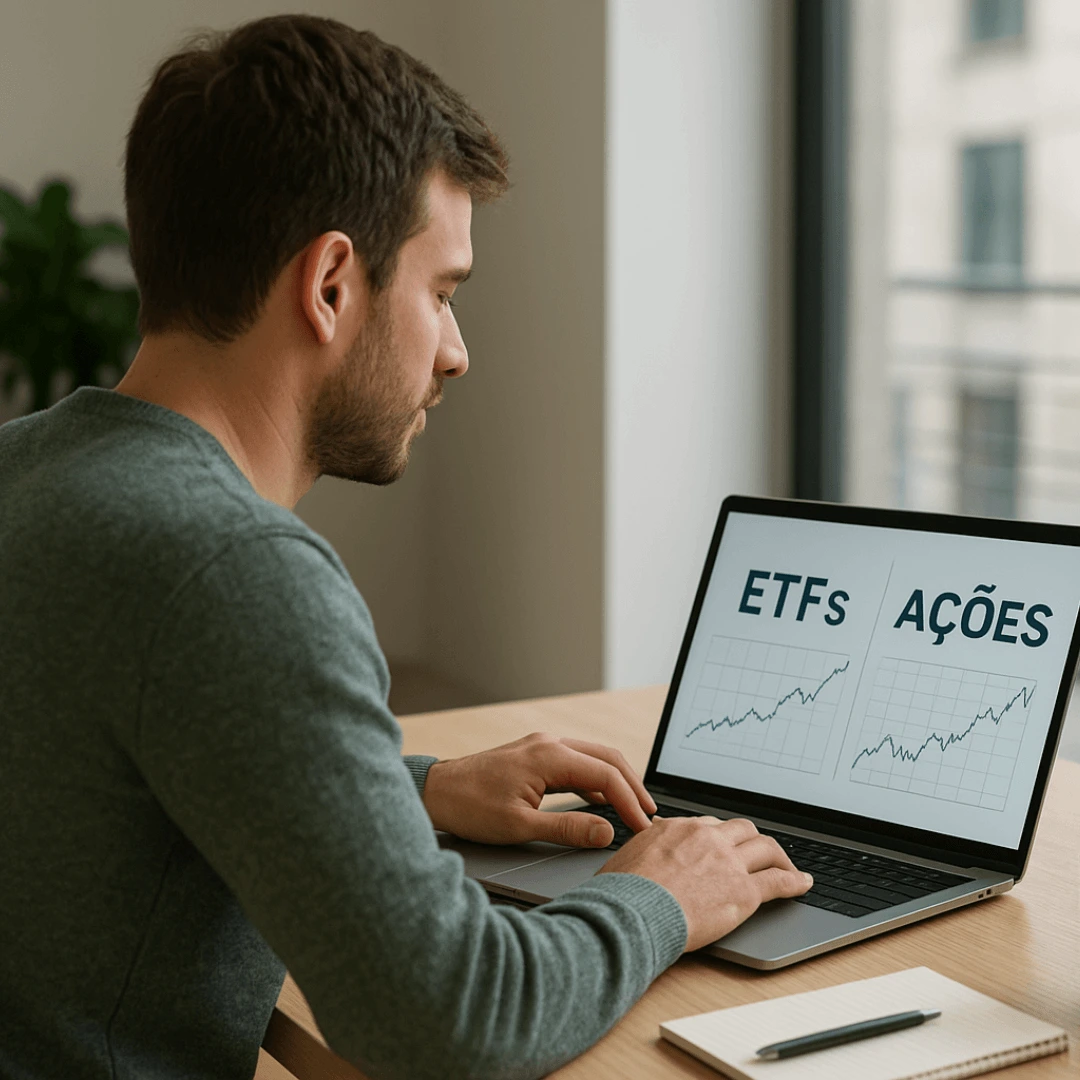
Investment-related terms that are likely to spring to mind when you start to take an interest in the subject include shares and ETFs. They are a hot topic, but not always clearly understood. ETFs vs. shares: which is better? Which is riskier? Which suits your profile? If you have any doubts, you’ve come to the right place.
This guide will help you understand the differences between the two options, and determine which might be better for you, even if you're just starting out and have limited funds.
What are ETFs?
ETFs (Exchange Traded Funds) are a type of investment fund that allows you to invest in many companies at the same time through a single product. Rather than selecting a particular stock, such as Apple or Microsoft, you purchase a "package” that tracks an index, such as the S&P 500 (comprising the 500 largest US companies), the MSCI World Index (companies from developed countries), or sector-specific indices, such as technology, renewable energies, or healthcare.
These funds are usually managed passively, meaning they aim to replicate an index rather than outperform it. They are widely used by people who want to easily diversify their investments over the long term at a low cost.
Yes, you can buy and sell them in real time, just as you would with any other listed share.
Why should you invest in ETFs?
They offer a practical, affordable and safe way to gain exposure to the financial market without having to analyse individual companies.
What are shares?
A share represents a small portion of ownership of a listed company. When you buy shares in companies such as Galp, Microsoft or Nike, you become a shareholder. This entitles you to benefit from the company’s growth and, in some cases, receive dividends (a portion of the profits distributed to investors).
Unlike ETFs, with this option you choose the companies in which you wish to invest. The value of each share depends on the company’s performance, its market perception, and external factors such as interest rates and global events.
Why should you invest in shares?
Investing in shares is ideal for those who enjoy keeping up to date with the latest information, analysing companies and making active decisions about their portfolio.
Advantages and risks of investing in ETFs
Before investing, it is important to understand the advantages and disadvantages of each option:
Advantages:
• Automatic diversification: With an ETF, you invest in dozens or even hundreds of companies simultaneously. If one of them performs badly, the impact is reduced;
• Easier to get started: You can invest small amounts without needing in-depth technical knowledge.
Precautions to take:
• Track the market: If the index falls, the value of your ETF will also decrease;
• Lack of personalisation: You cannot choose individual companies within the fund;
• Not all ETFs are the same: Some are complex products with leverage or exposure to volatile sectors. Always inform yourself before investing.
Advantages and risks of investing in shares
Investing directly in shares can give you more control, but it also requires more attention. Below are the pros and cons:
Benefits:
• Greater potential for appreciation: Some shares can increase in value over time;
• Make your own choices: Build your portfolio with companies and sectors that you know and believe in;
• Dividends as extra income: Some companies pay dividends regularly, meaning shareholders receive a share of the profits;
• Direct connection to the business world: Ideal for those who like to keep a close eye on the economy and companies.
Precautions to take:
• High volatility: Shares react quickly to news, results or global instability;
• Concentrated risk: Investing heavily in a single company can be risky. If its value falls, you could incur significant losses;
• More monitoring is required: Investing well in shares requires regular analysis and well-informed decisions.
ETFs vs. shares: how do you choose?
There is no right answer; it all depends on you. If you’re looking for a simpler, more automated and balanced investment option, then ETFs might be a better choice. However, if you're curious and want to learn how to analyse companies, and if you're willing to take on more risk in the hope of achieving higher returns, then investing in shares could be a good option for you.
The following table provides an overview of the two types of product:
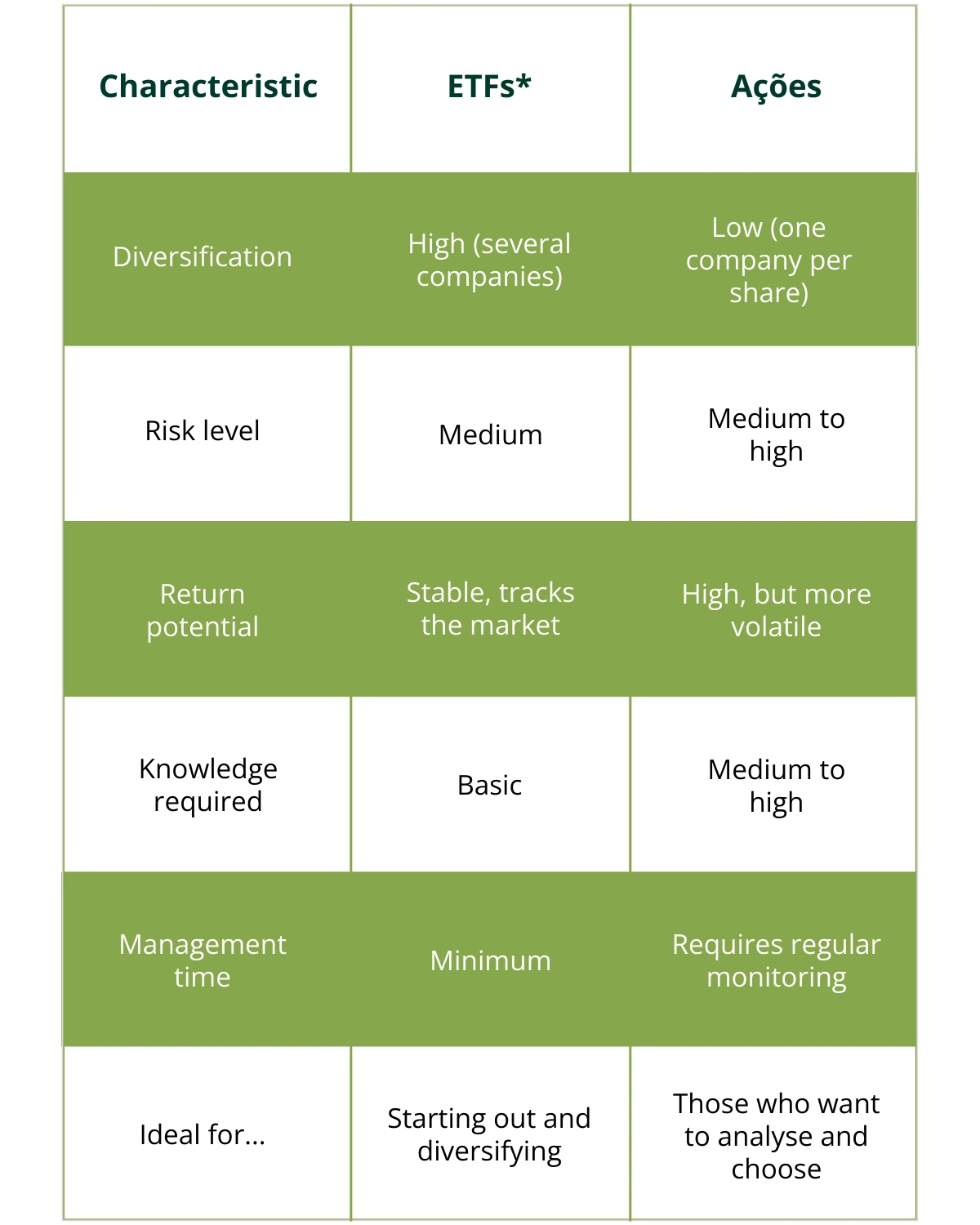
* For illustrative purposes, assumes a non-complex ETF exposed to a stock index such as S&P500 or MSCI World.
How to invest in ETFs
Would you like to start with a simpler and more diversified investment that carries less potential risk? When it comes to getting started in the markets, ETFs are a tried and tested method. Here’s everything you need to get started, even if you've never invested before.
1. Open an account with a broker or bank that offers access to ETFs
Firstly, you need a platform that allows you to buy ETFs (like Banco Carregosa) and provides access to international markets.
Opening an account online is easy. The process is quick, and you can start by investing small amounts.
2. Define your investment objective
Investing just for the sake of it isn’t enough. Ask yourself:
• Do you want to save for the long term, for example, for retirement, a house or financial independence?
• Do you want to supplement your monthly savings by investing in a more profitable product?
Understanding this will enable you to choose the most suitable ETF and determine your monthly investment amount.
3. Choose a simple, diversified ETF
Keep it simple at first. Look for ETFs such as:
• MSCI World (companies from developed countries);
• S&P 500 (the 500 largest US companies);
• Nasdaq-100 (US tech companies).
These funds are reliable and have a proven track record.
Additional tip: Check whether the ETF is cumulative, i.e. whether it reinvests profits. If so, it’s ideal for long-term investors.
4. Start investing
You don’t need to invest large sums. Many ETFs are available from €30 or €50, depending on the unit price. You can either make a one-off purchase or invest every month.
How to invest in shares
If you prefer more control and want to invest in familiar companies, shares could be the right choice for you. Here’s how to get started:
1. Open a share account with a broker or bank
As with ETFs, you will need a reliable platform. If you have a Banco Carregosa account, you can buy shares in national and international companies, such as Apple, Amazon, Galp, etc.
2. Decide how much you want to invest and how much risk you are willing to take
Start with what you feel comfortable doing. Also consider the time frame: short, medium or long term? This will help you choose suitable stocks.
3. Choose companies that you know and follow
Think of the brands and companies that play a part in your daily life. Which products do you use? Which sectors do you think will be important in the future? Keeping track of companies that you are already familiar with can help you to understand market movements more easily.
When you’re just starting out, it’s usually a good idea to go for shares in companies that are well-established, have a solid reputation and a strong market presence.
4. Analyse before you buy
Even if you really like a brand, make investment decisions based on data.
• Evaluate the company. Look for evidence of growth and profitability;
• Check whether they pay dividends (an additional source of income);
• Compare them with their competitors and the sector average.
You can find this information on financial websites or directly on investment platforms.
5. Buy your first share
Now your account is open, all you have to do is search for the share and place your order to buy it. There are two main types of orders:
• Market order (buy at the current price);
• Limit order (you set the price you are willing to pay).
You can start by investing in affordable companies (not all of them require an investment of hundreds of euros). Some brokers even allow you to buy fractions of shares.
Start where you are. Grow with NextGen.
Investing isn’t just for experts. Anyone who wants to start building financial freedom can do so one step at a time. You will already feel more confident and clearer about the differences between ETFs and shares once you understand them.
With Carregosa NextGen, you have access to simple tools, quality products and support designed for beginners. Explore ETFs, buy shares and build your portfolio at your own pace, safe in the knowledge that you’re learning from an expert.