



The price of cobalt: opportunities and risks for the investor


Is it worth investing in cobalt? With accelerating global growth prospects and a wide range of applications, from lithium batteries in mobile phones, laptops and electric cars to metal alloys and super alloys in aerospace and nuclear reactors, this metal plays a fundamental role in many sectors. It is also essential in the manufacture of magnets for wind turbines, in the chemical industry where it is used as a pigment and catalyst, and in medicine, particularly in radiotherapy and the sterilisation of medical equipment. It’s no surprise that cobalt is on the radar of many investors. Understanding the factors that influence its price and identifying the opportunities and risks is essential for an informed investment. Find out all you need to know here.
What is cobalt and why is it so valuable?
Cobalt is a metal used in a wide range of industries, but its impact is greatest in battery production. With the growing demand for electronic devices and electric vehicles, the need for lithium-ion batteries, which use cobalt, shows no signs of slowing. A single electric car, for example, requires 5 to 10 kg of cobalt.
Price of cobalt (USD / tonne)
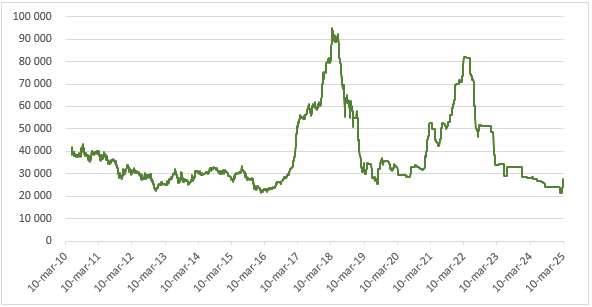
Source: Bloomberg/Banco Carregosa
Cobalt is also used in metal alloys that are resistant to heat and corrosion, making it essential for the aerospace industry and the manufacture of high-strength tools. However, around 70 per cent of the world's cobalt is mined in a single country, the Democratic Republic of Congo, whose political instability has an impact on its supply. This geographical dependency means that cobalt is often exposed to fluctuating global prices.
Factors affecting the price of cobalto
To understand the fluctuations in the price of cobalt, it is important to analyse the following drivers of supply and demand for this valuable metal.
1. Demand for electric vehicles
One of the main drivers of the cobalt price is the fluctuating demand for electric vehicles. The major car brands are investing heavily in this segment, suggesting that demand for cobalt is likely to remain high in the near future.
2. Supply constraints
Political issues and regional conflicts can affect cobalt production and therefore the price. In addition, working conditions in cobalt mines are a critical issue, with growing concerns about working conditions and environmental sustainability.
These factors can be the cause of significant fluctuations in the price of cobalt as companies and governments search for more ethical sources of supply.
3. Technological alternatives
Despite the growing demand, technological innovations could change the dynamics of the market. Some brands have announced that they are working on batteries that use less cobalt or none at all. If there are rapid advances in technology, there could be a reduction in demand for the metal and therefore a possible fall in the price of the metal.
4. Market speculation
As with many commodities, the price of cobalt is influenced by market bets. Large investors and investment funds buy and sell the metal based on short and medium term expectations, which can increase volatility.
Investment outlook: why invest in cobalt?
These are some of the main reasons for investing in cobalt.
1. Rising global demand
With the increasing emphasis on the transition to renewable energy sources, demand for cobalt-based lithium-ion batteries is on the rise. This scenario represents a significant opportunity for investors who want to get ahead of a long-term trend and benefit from the growth of the battery industry.
2. Portfolio diversification
Investing in cobalt can be a good way to diversify a portfolio, particularly for those seeking exposure to the mobility sectors. By including cobalt in a portfolio, investors can balance their exposure to more traditional investments.
3. Support for sustainability and innovation
Investing in cobalt is also a way to support innovation and to promote sustainability. Given the role that cobalt plays in the transition to cleaner and more efficient technologies, investing in this metal also helps to reduce carbon emissions and promote the development of sustainable energy solutions.
Risks of investing in cobalt: what to look out for
In addition to the benefits, it is also important to be aware of the potential risks of an investment in cobalt.
1. Price volatility
The price of cobalt can be very volatile. Factors such as political changes in the world’s major producers can cause significant fluctuations in the market. Issues such as regional conflicts, political instability and fluctuations in global supply and demand can have a significant impact on the price of cobalt.
2. Ethical issues
Cobalt mining raises significant sustainability and ethical concerns. Several initiatives are underway to promote a more sustainable and ethical supply chain. One of the most promising solutions is to increase recycling. Recycling batteries and other cobalt- containing products can help to recover the metal in a more responsible way.
3. Technological innovation and alternatives
Although cobalt is currently essential for lithium-ion batteries, technological advances may reduce its importance in the future. If these innovations become widespread, the demand for cobalt could decrease, which would have a negative impact on prices and the value of the investment.
How to invest in cobalt
One of the easiest ways to gain direct exposure to cobalt is through shares in companies that produce the metal, as direct exposure to the physical metal is prohibitively expensive and the futures market is very thin, illiquid and requires a high level of expertise. Alternatively, it is possible to invest in companies that use cobalt in their products, such as electric vehicle battery manufacturers. This is a more indirect exposure, especially if these companies benefit from lower cobalt prices.
Another way to invest in cobalt is through mutual funds and ETFs that focus specifically on the metal or on the mining industry more broadly. They offer diversified exposure to cobalt and reduce the risk associated with direct investment. Other funds can invest in copper and nickel, which are often linked to cobalt production, providing indirect exposure to the metal.
Banco Carregosa, maximising investment potential in cobalto
Investing in cobalt can be a good strategy, but only for those willing to face the challenges involved. If you are considering this type of investment, contact us. Our team of experts is ready to advise you on the best strategies for your particular case.