



The Price of Iron: Is it worth the investment?

Iron is the most widely used metal in the world, particularly in the form of steel, in key industries such as construction, engineering, automotive and machinery, making it a vital element of the global economy. But is investing in iron a good option? In this article, we’ll look at the factors that influence the price of iron, its historical behaviour and how you can take advantage of this market.
World production of leading mineral commodities in 2024 (thousand tonnes)
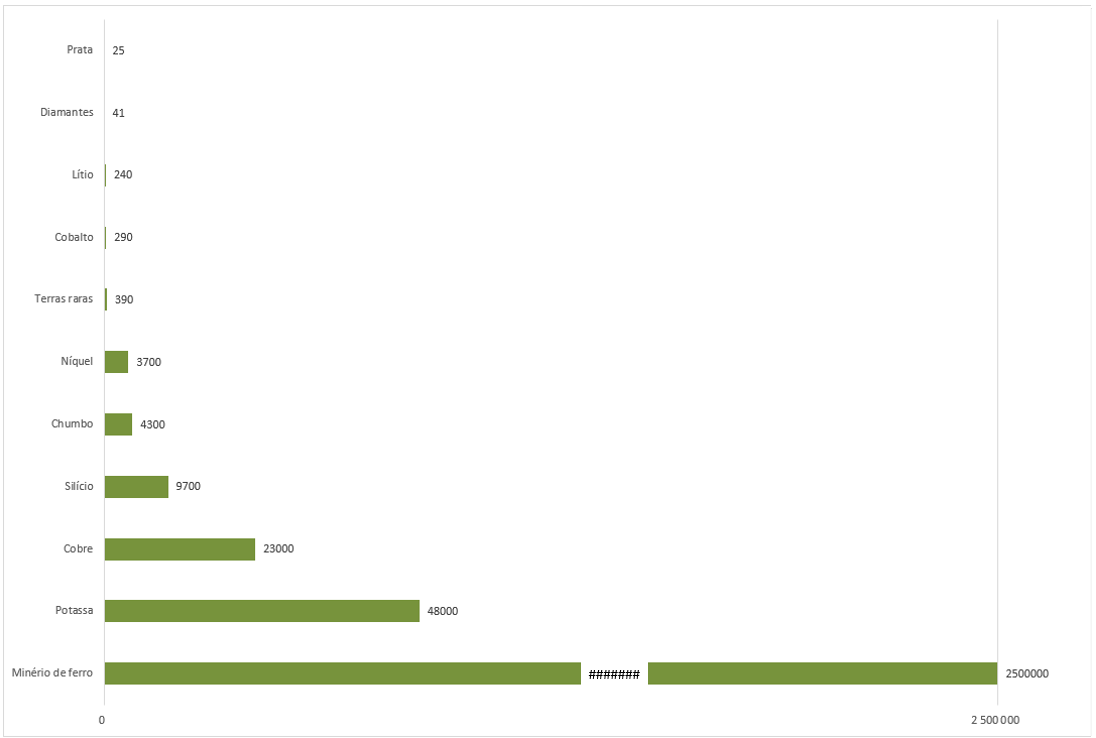
Source: Statista/Banco Carregosa
Iron prices: what has been the trend?
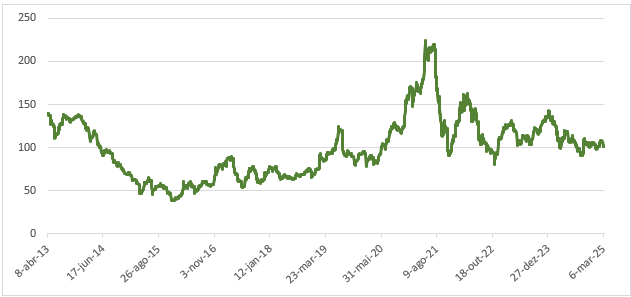
Since 2020, the price of iron has been characterised by considerable volatility, with sharp falls due to the COVID-19 pandemic followed by significant recoveries. In 2021, the market experienced a strong recovery, with prices peaking at $215 per tonne in June. However, this rise was followed by a fall to 113 dollars per tonne in September, reflecting the pressure of increased supply from the major producers.
Iron ore price trend (Iron Ore Fine China Import 62%) (US dollars/metric tonne) (2013- 2025)
Source: Bloomberg/Banco Carregosa
Since then, the price of iron has continued to fall, approaching $100 per tonne. As the chart shows, the iron market is highly unpredictable and investors should be cautious before making any decisions.
What influences the price of iron?
The price of iron, like any other commodity, is heavily influenced by the dynamics of global supply and demand. In this case, however, both supply and demand are concentrated in a few major players.
On the demand side, one of the main drivers is the dynamics in the consuming countries, led by China, the world’s largest consumer. Any change in construction or economic stimulus could have a direct impact on the price of iron.
Another key factor is the supply of iron ore. Mining is concentrated in a few large producers, such as Glencore, BHP, Rio Tinto, and Vale, who dominate the market and have access to reserves that allow them to increase production quickly. As these companies increase production, the market can easily become oversupplied, putting downward pressure on iron prices.
Largest iron ore mines in the world
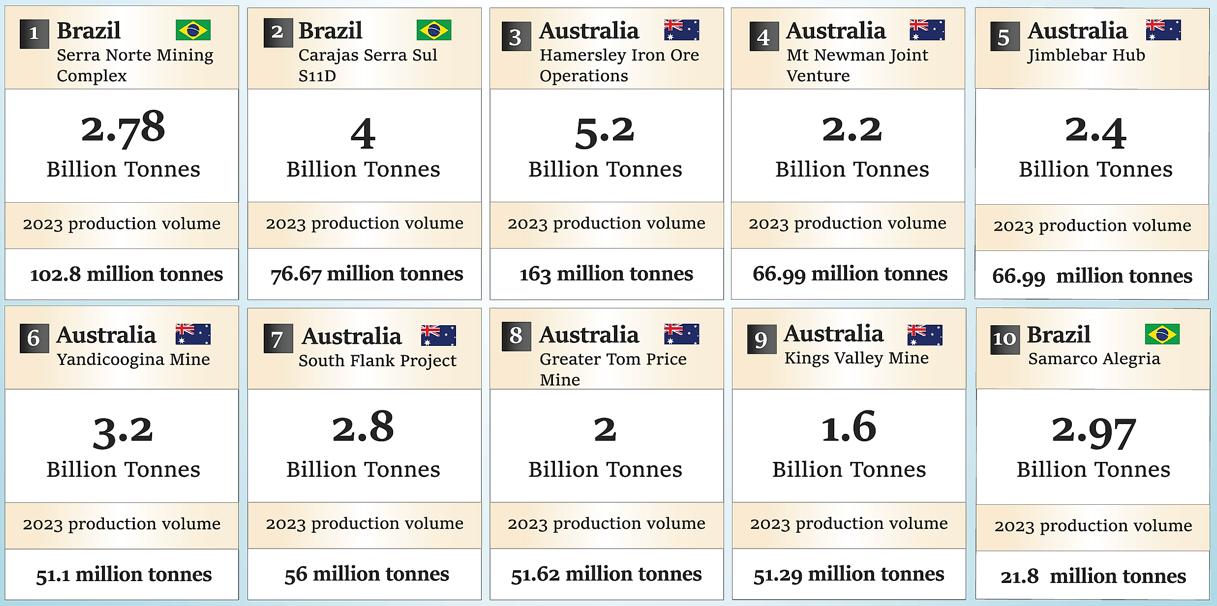
Source: World Atlas
In addition, logistical and climate issues, such as heavy rainfall in mining regions, could limit production and affect global supply, causing iron prices to rise.
Why invest in iron?
Investing in iron can be an interesting strategy for those looking to diversify their portfolio and gain exposure to a sector that is essential to the global economy. Iron and steel are so present in our daily lives that the demand for them is unlikely to disappear. Developing countries continue to invest in infrastructure, keeping demand for iron high. In addition, the transition to renewable energy and new technologies depends on this resource, making it even more important for the future.
Another point to consider is that large iron producers benefit from economies of scale. This allows them to continue to profit even when prices fall and makes them more resilient to economic crises. One way to mitigate risk while capitalising on growth opportunities is to invest in mining companies with solid fundamentals, such as access to low-cost deposits and efficient operations.
Iron also tends to benefit from economic cycles. When the global economy is growing, demand for steel increases, pushing up the price of iron. Therefore, for investors who believe in a global economic recovery or large infrastructure projects, iron can be a long-term bet with interesting return potential.
Risks of investing in iron
Despite the potential returns, investing in iron is not without risk. Price volatility is one of the main concerns, as it is subject to rapid fluctuations based on changes in demand, particularly from China. Reduced economic activity in the world's largest consumer could lead to a sharp fall in prices and thus have a negative impact on the value of investments.
Another significant risk relates to regulatory and environmental issues. As the world becomes more aware of environmental issues, iron ore mining and steel production are under increasing pressure to reduce their carbon emissions. New environmental regulations may increase the operating costs of mining companies, thereby affecting their profitability. In addition, advances in renewable energy and materials innovation may gradually reduce the reliance on iron in certain sectors.
Finally, investors should be aware of potential geopolitical challenges. Trade disputes between countries, conflicts or unexpected changes in economic policy can have a significant impact on the iron trade. These factors introduce a degree of uncertainty that can increase the risk of investing in the sector.
How to invest in iron
There are several ways to invest in iron, from the simplest and most accessible to the most sophisticated and risky, depending on the risk profile and objectives of each investor.
1. Shares in mining companies
One of the most direct ways to invest in iron is to buy shares in mining companies involved in the extraction and production of iron ore. Large companies such as BHP, Rio Tinto and Vale are some of the world’s biggest producers and their operations have a major impact on the market.
Because of their size, these companies may be better placed to withstand periods of falling prices. In addition, many have a history of paying dividends, which can be a way of generating passive income while benefiting from growth in the sector.
2. Investment funds and ETFs
If you prefer a less direct but more diversified approach, investment funds or ETFs (Exchange Traded Funds) may be a good option. Some of these funds focus on commodities or specific sectors, including iron. By investing in an ETF, you are essentially buying a basket of shares from several companies in the sector, reducing the risk associated with investing in a single company.
ETFs are highly liquid and allow investors to access the market easily and with lower transaction costs than buying individual shares. For those who wish to gain exposure to the iron market without being directly exposed to an individual company, ETFs can be a practical and effective solution.
3. Iron futures
For more advanced investors with a higher risk tolerance, there is the option of investing in iron ore futures. Futures contracts are agreements to buy or sell a commodity at a predetermined price and date in the future. This type of investment is often used to speculate on price movements. It is also used by companies wishing to hedge against price fluctuations.
Although futures offer the potential for high returns, they can also result in significant losses if the market moves against an investor’s expectations. This type of investment requires in-depth knowledge of commodities markets and the ability to manage high levels of risk. It is therefore not recommended for inexperienced or conservative investors.
4. Shares in related companies
Another way to gain exposure to iron without having to invest directly in producers is to invest in companies that rely heavily on the metal, such as steel mills or heavy equipment manufacturers. Construction and engineering companies that use large amounts of steel can also benefit from rising iron prices. This type of investment provides indirect exposure to the market, but may be of interest to those seeking diversification.
5. Investment opportunities in sustainability trends
Another way to invest in the iron sector is to focus on companies that are at the forefront of sustainable innovation. Companies that lead this transition can offer interesting long-term opportunities as the world moves towards a greener economy. This type of investment This type of investment combines the growth potential of the sector with the growing demand for sustainable business practices.
Industry trends: smart mining and the future of iron
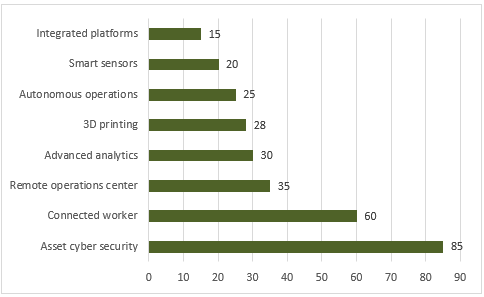
One of the most promising concepts in the mining industry is smart mining. This involves the integration of advanced technologies such as automation, 3D printing, cybersecurity and remote management These trends could have a significant impact on the price of iron in the future, in addition to the potential to increase the efficiency and productivity of operations.
Projected rate of adoption of smart mining technologies around the world in 2025
Source: Statista/Banco Carregosa
Automation and robotics
Automation makes iron extraction and processing operations more seamless, even in the most difficult conditions, and with less human intervention. A practical example of automation already underway is Rio Tinto’s Pilbara mine in Australia. In this mine, autonomous trucks transport iron without human intervention, following programmed routes 24 hours a day. This technology reduces the risk of accidents and increases productivity. The result? Lower operating costs and more stable production, which could help balance supply in the market and potentially moderate prices.
3D printing
One of the main difficulties in mining is operating in remote locations, where the supply chain for parts and equipment can be challenging and expensive. 3D printing offers an answer to this problem, allowing customised parts to be produced directly on site. This technology represents a major step forward in terms of availability of spare parts and simplifies the management of stock levels.
For example, if a critical mining machine breaks down in a remote location, ordering parts can take weeks and result in costly downtime. With 3D printing, however, these parts can be manufactured on site, ensuring continuity of operations and reducing logistics costs.
Cybersecurity and remote management
As mining operations become more digitally connected, cybersecurity becomes critical. Remote management, where operators control mines from remote locations, is already a reality, bringing greater security, flexibility and cost savings. By ensuring more stable and predictable production, these technologies can help smooth out price fluctuations.
The Brazilian mining company Vale is one of the main players in this technology. Operators in control centres thousands of kilometres away manage entire mines. In Brazil, for example, Vale has centres in São Paulo that control operations in Pará. The ability to manage mines remotely reduces costs and improves the flexibility of operations, which can mitigate price fluctuations.
Banco Carregosa: your strategic partner for investing in iron
If you are interested in this metal and are considering diversifying your portfolio, Banco Carregosa is the right partner to guide your investments. With our wealth management experience and in-depth knowledge of the commodities markets, we can help you make informed decisions and maximise your returns.
Our experts are ready to develop a strategy tailored to your needs and financial objectives, whether you're interested in shares in major mining companies, investment funds or personalised solutions. Contact us to find out how we can help you safely and efficiently take advantage of the best opportunities in the iron market.