



10 Key Questions to Take Advantage of Investment Trends in 2026


Summary
• AI, precious metals, or renewable energies are on every investor's radar for 2026, but there are many other possibilities;
• More than just following specific trends, it is useful to know the topics currently under debate in the financial area;
• This article explores some of these themes, as they are discussed in the market, with the aim of contextualizing the debate and stimulating informed reflection.
Predicting the future is always a challenge. Instead of seeking certainties, it is more important to raise the right questions that help discuss investment trends. These are the topics driving the sector, the financial press, and social media, helping investors reflect on opportunities and potential risks in 2026.
Will AI investment maintain its momentum?
This is an investment trend that is hard to ignore. In 2026, interest in artificial intelligence remains high, with an emphasis on companies' ability to generate real economic value from AI. Rather than discussing whether AI is transformative, market conversations are focused on which companies and sectors are integrating AI in a structured way into their products, services, and processes.
The theme has been differentiating companies that use AI as a strategic narrative from those that incorporate it more structurally. Some areas receiving attention include:
• Software companies and enterprise platforms: They are frequently mentioned for process automation, increased productivity, and the creation of subscription or licensing models—aspects that attract analytical interest;
• Specialized hardware companies: Beyond chip manufacturers, there are companies providing equipment, manufacturing tools, and critical technologies for the production of advanced semiconductors. This sector is highlighted by analysts due to its central role in the AI value chain;
• Vertical services and solutions companies: AI is being applied in sectors such as healthcare, industry, logistics, financial services, or cybersecurity. In these cases, it is considered a competitive differentiator that has drawn industry attention for how it contributes to process optimization and decision-making
• Thematic funds and ETFs with AI exposure: Instruments that aggregate software, hardware, services, and automation companies stand out, allowing for diversification and tracking the sector's evolution.
• Cybersecurity companies with an AI focus: As AI integrates into critical systems, attention grows for threat detection solutions, infrastructure protection, and data security.
• Industrial automation and robotics companies: The convergence of AI, sensors, and automation has been transforming sectors such as industry, logistics, and manufacturing. Among analysts, these companies are frequently mentioned for the increasing use of AI in practical real-world applications.
Will 2026 be the year AI becomes a reliable investment tool?
Artificial intelligence is no longer just an experimental concept in the investment world; it is concretely transforming how analysis, decisions, and risk management are conducted. AI shows particular utility in tasks such as historical pattern analysis, anomaly detection, scenario evaluation, and dynamic risk management—areas where scale and speed make a difference.
In 2026, the use of AI is expected to become more structured and less experimental, with greater attention to the reliability of the tools and the consistency of the analyses performed. Industry debate highlights that full confidence in AI as an investment tool continues to depend on a key factor: integration with human judgment. The technology is only as effective as the data, models, and supervision applied to it. In contexts of high uncertainty, exogenous shocks, or structural changes, human judgment remains essential to interpret results, contextualize decisions, and manage non-quantifiable risks.
Will we see more Mergers & Acquisitions in critical sectors?
After a record year in 2025, with over 4.5 trillion dollars in global mergers and acquisitions, the market is discussing whether 2026 can sustain this momentum. Everything indicates that transactional activity should remain high, albeit in a more selective and strategic manner, focusing on sectors considered critical for growth, innovation, and economic resilience.
Consolidation is analyzed based on structural factors: companies with solid balance sheets and high liquidity levels, pressure to gain scale, the need for quick access to technology and talent, and adaptation to an increasingly demanding competitive context. In parallel, greater predictability in financial conditions and a gradual stabilization of interest rates are pointed out as factors that may facilitate the financing of strategic operations.
The technology and healthcare sectors continue to receive attention. In technology, areas such as artificial intelligence, cybersecurity, and specialized software are frequently discussed as ways to accelerate innovation and strengthen competitive positioning. In healthcare, themes such as population aging, pharmaceutical innovation, and the need for operational efficiency sustain consolidation movements, especially among companies with complementary portfolios.
Nevertheless, the regulatory environment and antitrust scrutiny remain relevant factors, especially in large operations, influencing the size and nature of transactions.
Will Gold and Precious Metals continue to be safe havens?
Gold regained prominence in 2025 as a central element in asset allocation strategies, especially in a context of geopolitical uncertainty, financial market volatility, and doubts regarding the trajectory of interest rates. In 2026, many analysts expect this protective role to remain relevant.
Beyond gold, other precious metals such as silver and platinum have received attention for their dual role. On one hand, they function as a store of value and a diversification instrument; on the other, they have significant industrial use, especially in sectors linked to energy, electrification, electric mobility, and clean technologies. This combination is discussed as an interesting dynamic, where metals can be cited both in defensive contexts and in investment cycles linked to the energy transition and technological innovation.
However, analysts emphasize that these assets are not exempt from volatility. The evolution of real interest rates, the performance of the dollar, and the pace of global economic growth continue to strongly influence the performance of precious metals, reinforcing the need for a balanced approach by investors.
Will Stablecoins transform the Cryptocurrency universe?
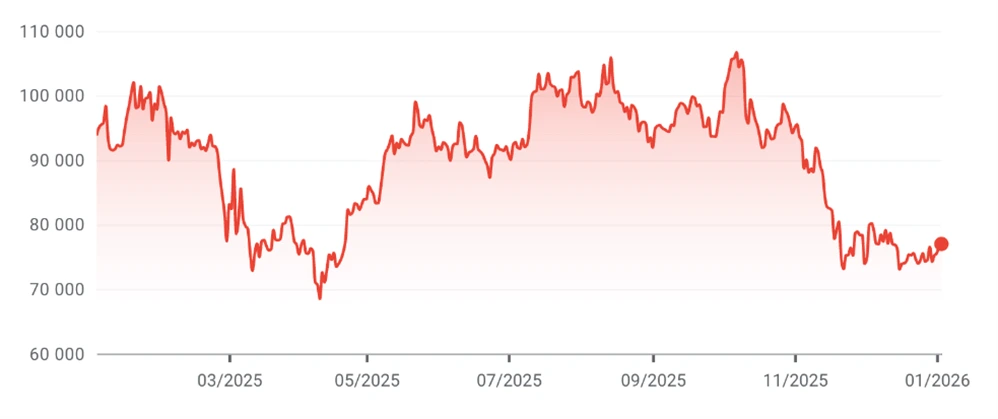
The cryptocurrency market enters 2026 after a period of sharp corrections that left even the most convinced investors on alert. In this context, stablecoins have been a recurring topic of discussion.
Bitcoin price evolution (2025)
Source: Google Finance
By being pegged to traditional assets, such as fiat currencies (dollar, euro) or other reserve instruments, stablecoins offer a bridge between the traditional financial world and the decentralized universe.
In 2026, analysts highlight that the impact of stablecoins may go beyond technological innovation, contributing to debates about the integration of cryptocurrencies into the real economy.
Will investment in Data Centers start to bear fruit?
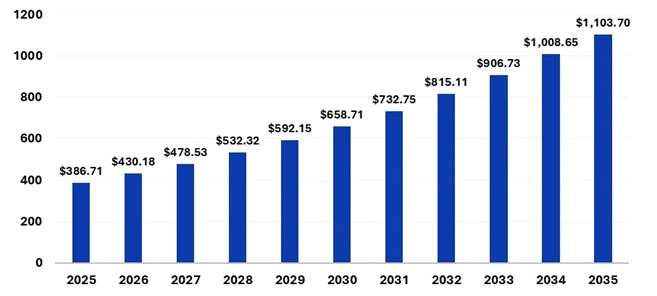
Data centers have become critical infrastructure for the digital economy. The expansion of AI, cloud computing, and automation is creating structural demand for processing and storage capacity, which is highly capital and energy-intensive.
Global Data Center market value
Source: Precedence Research
In 2026, it will be interesting to see if this investment trend can extend beyond the technology sector, involving specialized real estate, utilities, electrical grids, and structured financing. Some analysts highlight the growing attention given to the role of these infrastructures in supporting the digital economy and the expanding technological ecosystem.
Will Renewable Energies continue to gain strength?
The energy transition remains one of the most discussed topics. Instead of an exclusive focus on renewable energies, the coexistence of various solutions is gaining prominence, including continuous investment in solar and wind, the use of natural gas as a transition source, reinforcement of electrical grids, and the growth of energy storage solutions (such as solar energy batteries).
In this context, particular attention has been paid to companies with more resilient and predictable business models. Integrated utilities, which combine renewable production with grid management and distribution, are frequently mentioned for their ability to operate at different stages of the energy chain. Similarly, companies linked to energy infrastructures, such as transmission, distribution, and storage networks, appear in the debate as key pieces for enabling the energy transition in the medium and long term.
Will Logistics continue to grow?
Logistics remains a relevant topic in discussions about global supply chains, driven by structural changes in international trade and consumer habits.
After the shocks of recent years, many companies have begun to prioritize security and reliability over the lowest possible cost. This translates into more inventory, a greater diversity of suppliers, and investment in logistical infrastructure, such as warehouses, distribution centers, and transport networks, which supports structural demand for the sector. At the same time, automation, digitalization, and the use of data for route optimization and stock management are frequently cited as critical competitive factors in the sector.
However, segments most exposed to the economic cycle may face greater volatility. In contrast, areas such as warehousing, e-commerce logistics, and critical infrastructures are repeatedly mentioned for their greater stability and revenue visibility.
Will 2026 finally be the big year for Autonomous Mobility?
Autonomous mobility remains one of the most debated investment trends. The development of autonomous vehicles, including concepts such as robotaxis and driverless systems, has advanced, with several companies testing increasingly sophisticated solutions.
Instead of rapid and widespread adoption, the industry consensus points toward gradual and segmented progress. The most relevant developments are concentrated in areas such as autonomous vehicles for logistics, transportation in delimited zones (such as ports, industrial parks, or corporate campuses), and advanced driver assistance systems. These technologies, already integrated into commercial and passenger vehicles, are frequently referred to as intermediate stages, with an impact on safety and efficiency, but still dependent on human supervision.
Despite technological progress, significant challenges remain. Regulatory issues, legal liability, safety, implementation costs, and user acceptance continue to condition broader adoption. Additionally, autonomous mobility requires complex digital infrastructures, including sensors, advanced software, artificial intelligence, and high data processing capacity, making development capital-intensive.
In this context, the debate has centered not only on vehicle manufacturers but also on the technological ecosystem that supports this transition.
Will we see more Corporate Bonds in investment strategies?
Corporate bonds, issued by non-state companies, have been gaining prominence. In 2026, this theme emerges associated with the financing needs of large-scale projects, namely in areas such as data centers, artificial intelligence infrastructures, cloud, semiconductors, and energy transition.
These issuances are often referred to as an alternative to equity financing for large companies. Even so, the market recognizes that not all corporate bonds are the same. Factors such as the issuer's quality, debt level, debt maturity, and sensitivity to interest rates remain central to the evaluation of these types of instruments. Even in the case of large companies with solid fundamentals, these elements remain relevant, especially in scenarios of economic slowdown or changes in the cost of capital.
Banco Carregosa, your investment partner
The beginning of 2026 finds the markets in a context marked by structural changes, technological innovation, and new economic challenges. In an increasingly complex environment, informed analysis, continuous monitoring, and understanding of different risk factors play a central role in financial decision-making.
Banco Carregosa closely monitors these dynamics, providing information, analysis, and context to support its clients in reflecting on the economic and financial environment. Get in touch with the team of specialists at Banco Carregosa.