



Kevin Warsh’s Fed


Kevin Warsh was appointed to lead the Federal Reserve amidst a delicate macroeconomic backdrop. Inflation remains above the 2% target, the labour market is losing momentum, the central bank’s balance sheet remains close to $6.7 trillion, and the US economy is undergoing a new investment cycle linked to artificial intelligence, energy, and reindustrialisation.
The Fed’s first meeting under his leadership suggested a continuation of substance, albeit with a change in approach. At the June meeting, the Federal Open Market Committee (FOMC) unanimously decided to keep the federal funds rate target range at 3.50-3.75%. The key difference lay in the shorter, less prescriptive statement that was less committed to the previously announced rate path.
This approach has been interpreted as a shift away from forward guidance – the practice of central banks seeking to influence investors’ expectations in advance. However, it does not appear that Warsh intends to introduce uncertainty for its own sake. Rather, the aim is to prevent conditional statements from being interpreted as promises, and to regain the freedom to respond to rapidly changing economic data.
The context justifies this caution. In May, the PCE index, the Fed’s preferred inflation benchmark, showed an inflation rate of 4.1%, while the core component reached 3.4%. In June, the Consumer Price Index showed more favourable signs. Year-on-year inflation fell from 4.2% to 3.5%, while the core rate dropped to 2.6%. The economy added just 57,000 jobs in June, with the unemployment rate standing at 4.2%.
Warsh is inheriting an economy that remains resilient, albeit one that is operating within a far more uncertain environment than at the beginning of the year. The main challenge for the Fed will be distinguishing between temporary shocks and structural changes in order to preserve its credibility in fighting inflation while ensuring that an excessively restrictive stance does not unnecessarily jeopardise growth and employment.
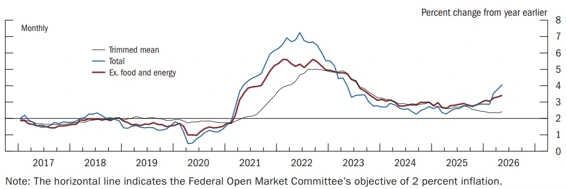
Figure 1 - Federal Reserve, Monetary Policy Report, July 2026.
Warsh is generally associated with a firmer stance on tackling inflation, less tolerance of overly expansionary monetary policies, and support for reducing the size of the Federal Reserve’s balance sheet. This reputation stems, in part, from his time as a member of the Board of Governors between 2006 and 2011, during which period he repeatedly warned of the risks of inflation and the consequences of overly lenient monetary policy.
However, it would be too simplistic to see him as a purely hawkish chairperson. He places particular emphasis on the supply side of the economy, focusing on productivity, investment, technological innovation, and energy capacity. According to Warsh, monetary policy should not only respond to changes in demand, but also take into account the economy’s capacity to increase production without causing inflation.
This distinction is particularly important in the current investment cycle: in the first quarter of 2026, investment in equipment increased by around 8% year-on-year, while spending in the high-tech sector rose by almost 25%. If these investments boost productivity, the economy could grow faster without wages and prices rising in tandem.
In this scenario, Warsh may turn out to be less hawkish than his reputation suggests. If productivity were to improve consistently, the economy’s potential capacity would increase, enabling the Fed to cut rates even with relatively robust growth. Rather than interpreting any increase in activity as inflationary, the Fed would seek to identify the source of the growth, which would involve distinguishing between an expansion driven by excess demand and one driven by a genuine increase in supply capacity.
However, the FOMC’s projections indicate that this moment has not yet been reached. In June, the median forecast predicted PCE inflation of 3.6% by the end of 2026, 2.3% by the end of 2027, and just 2% by the end of 2028. The median projection for the federal funds rate stood at 3.8% by the end of this year, which is slightly above the current midpoint of 3.625%.
Taking a closer look at these forecasts reveals a significant split: nine participants anticipated rates higher than the current level, eight projected no change and just one forecast a decline. Additionally, 17 out of 18 members believed that the risks to inflation were still skewed towards the upside.
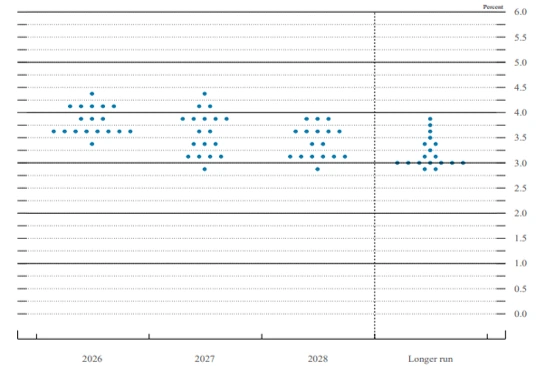
Figure 2 - Federal Reserve, Summary of Economic Projections, 17 June 2026, "FOMC participants’ assessments of appropriate monetary policy”.
Against this backdrop, Warsh is likely to take a cautious and patient approach. Although the recent improvement in the consumer price index reduces the urgency for further rate rises, PCE inflation remains too high to justify rapid cuts. The Fed is expected to keep interest rates steady while determining whether disinflation is gaining momentum and whether the labour market slowdown remains moderate.
The difference compared with previous chairpersons is less evident in the immediate level of rates and more evident in the way decisions are reached. Janet Yellen favoured ‘gradual’ normalisation, while Jerome Powell made data dependence a central part of the public message. Meanwhile, Ben Bernanke used explicit commitments to stimulate an economy close to the lower bound on interest rates. Warsh may combine elements of all three, but he is less inclined to announce the likely path in advance.
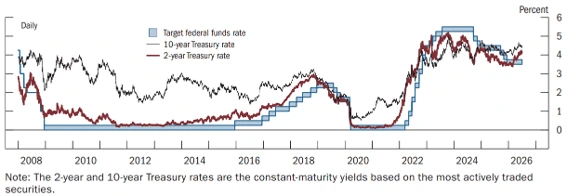
Figure 3 - Federal Reserve, Monetary Policy Report, July 2026, "Selected interest rates”.
Although Warsh’s position on interest rates depends on the data, his preference for a smaller balance sheet is much clearer. The Fed completed its quantitative tightening programme at the end of 2025, leaving it with assets worth around $6.7 trillion. The balance sheet stood at less than $1 trillion before the 2008 financial crisis. During the pandemic, it approached $9 trillion.
The current composition comprises around $4.5 trillion of Treasury securities, as well as approximately $2 trillion of agency debt and mortgage-backed securities (MBS). In terms of liabilities, bank reserves total around $3.1 trillion.
Warsh believes that the size of the balance sheet should be evaluated based not only on the system’s liquidity, but also on its impact on the markets. Having an excessively large portfolio could reduce the amount of government debt available to private investors. It could also artificially compress term premiums and reinforce the perception that the central bank plays a permanent role in financing the economy.
However, the proposal does not involve an immediate reduction in the balance sheet. The Fed currently operates under a regime of abundant reserves, whereby the banking system has access to far more liquidity than is needed to meet its day-to-day requirements. Therefore, banks hold large amounts of reserves with the Federal Reserve, making them less reliant on funding from the interbank market. Under this regime, the Fed no longer controls short-term interest rates by creating liquidity shortages, as it did in the past. Instead, it primarily controls them through administered rates, notably the interest rate on bank reserves and the standing reverse repurchase facility. These instruments act as benchmarks for the cost of borrowing and help to ensure that the effective federal funds rate remains within the range specified by the central bank. However, an excessive reduction in reserves could once again create short-term funding tensions similar to those observed in the repo market in September 2019.
Therefore, the most likely strategy will be a gradual one. The Fed may allow a growing proportion of Treasury securities to mature, reduce its MBS portfolio gradually, and prioritise reinvestment in shorter-term instruments. This would make the balance sheet smaller and less exposed to duration risk, while also aligning it more closely with the structure of the federal debt market.
This may be one of the key differences compared to Bernanke, Yellen and Powell. Following the 2008 crisis, Bernanke established asset purchases as a key tool. Yellen began the process of normalisation cautiously and within the previously defined limits. During the pandemic, however, Powell aggressively expanded the balance sheet and subsequently initiated a faster reduction in quantitative easing.
It is expected that Warsh will advocate clearer separation between policy instruments. Interest rates would respond to the economic cycle, and the balance sheet would be managed in line with the structural objectives of liquidity, efficiency, and financial stability. In theory, this means that the Fed could cut short-term rates while continuing to shrink the balance sheet.
This combination would not be contradictory. Reducing the federal funds rate would ease short-term financing conditions, while shrinking the balance sheet would transfer a greater proportion of interest rate risk to the private market. The result could be a yield curve that is more influenced by economic fundamentals and less by the direct presence of the central bank.
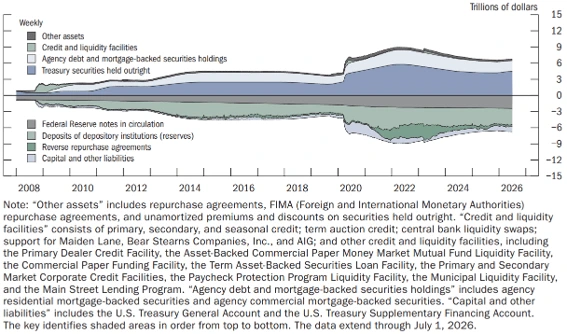
Figure 4 - Federal Reserve, Monetary Policy Report, July 2026, "Federal Reserve assets and liabilities”.
This is likely to be the most visible aspect of the change in terms of communication. Following the financial crisis, central banks have recognised the importance of communication as an additional tool for monetary policy. When interest rates were close to zero, suggesting that they would remain low for an extended period helped lower market rates and stimulate the economy.
Bernanke formalised this model by holding press conferences and providing economic projections and the dot plot. Building on this, Yellen emphasised that rate rises would be gradual. Powell extended press conferences to cover every meeting, seeking to make the Fed’s reaction function more transparent.
Warsh believes that this model has gone too far. If markets are given very detailed guidance, there is a risk that they will interpret a conditional forecast as a guarantee. When investors base their positions on a central trajectory, they become more vulnerable to sudden changes in outlook caused by new data.
According to Warsh, therefore, scaling back forward guidance could be beneficial. It encourages investors to analyse inflation, employment, growth, productivity and financial conditions in greater detail. It also reduces the temptation to interpret every official speech as a clear indication of what will happen at the next meeting.
In Warsh’s view, a credible Fed does not need to announce its decisions in advance. Most importantly, it must clearly explain its objectives, the risks involved, and the general criteria that guide monetary policy.
In some respects, this approach brings him closer to Alan Greenspan, whose Fed was less explicit about the future. However, it is unlikely that Warsh will return to the level of opacity seen in the 1980s and 1990s. Economic projections, meeting minutes, congressional testimony and press conferences are now all part of the landscape of institutional accountability.
The change will be more about making adjustments than changing nature. The Fed will continue to be transparent about the state of the economy, but they may not provide such specific details about the timing of their decisions. Rather than promising a specific set of actions, it is more likely to present different possible scenarios. For example, if inflation persists, interest rates may stay high or even increase. However, if productivity increases and prices slow down, there may be an opportunity to reduce interest rates.
For the markets, this could mean increased volatility when economic data is released. However, it could also lead to healthier price formation, where expectations are not so dependent on a single phrase in the statement or the words used by the chair.
Another important point to bear in mind is that, although Warsh’s view will be important, it will not be implemented in isolation. The FOMC comprises 12 voting members: the seven governors; the president of the Federal Reserve Bank of New York; and four regional presidents, who serve on a rotating basis. Decisions require consensus-building.
The disparities observed in the June projections demonstrate the wide range of viewpoints within the committee. While some members believe that inflation may necessitate higher interest rates, others are concerned that overly restrictive policies could weaken the labour market unnecessarily. Warsh will have to find a way to make these positions compatible and devise a strategy that the institution as a whole will accept.
This constraint could have a positive effect, as it may reduce the likelihood of abrupt changes and encourage the new leadership to develop a robust operational framework. For example, balance sheet normalisation will have to take into account the liquidity needs of banks and the stability of money markets. Similarly, less prescriptive communication will still need to meet transparency and accountability requirements.
It is likely that Warsh’s Fed will be more evolutionary than revolutionary. The institution can become more flexible and gradually reduce its balance sheet without abandoning the core elements that have underpinned its credibility in recent decades.
It does not appear that Kevin Warsh is seeking a permanently more restrictive Federal Reserve. His ambition is to establish an institution that can adapt more quickly to changes in the economy, such as fluctuations in inflation, productivity, technological investment and fiscal policy.
In the short term, inflation remaining above the target level justifies high interest rates and a cautious approach. However, growth in investment and the potential increase in productivity could allow for a less restrictive policy if disinflation takes hold.
The most significant change will be in the way monetary policy is designed. Warsh wants interest rates to be the primary instrument of economic stabilisation once again, the balance sheet to be smaller and more efficient, and communication to allow for a reaction to new data.
Investors will need to pay closer attention to fundamentals and rely less on forward guidance. However, a Fed that is not so set in its ways may also be able to respond more quickly to unexpected economic changes.
The success of Warsh’s tenure will be determined by his ability to balance three objectives: maintaining credibility on inflation, supporting a potentially more productive economy, and modernising the Fed’s approach while ensuring market stability is not compromised. If he succeeds, reduced predictability will not be seen as a sign of weakness, but rather as an indication of greater institutional flexibility.
Disclaimer: This article has been prepared by Banco Carregosa for informational and educational purposes only. It does not constitute an investment proposal or recommendation to buy, nor does it constitute personalised financial advice. Investing in financial instruments carries risks, including volatility risk, exchange rate risk, and the possibility of losing some or all of the invested capital. Past performance does not guarantee future results. Before making any financial decisions, you should review the pre-contractual and legally required documentation (such as the KID) to assess whether the solutions are appropriate for your investor profile, financial goals, time horizon and liquidity needs.