



Market Volatility: What it is and how you can manage it in your investments

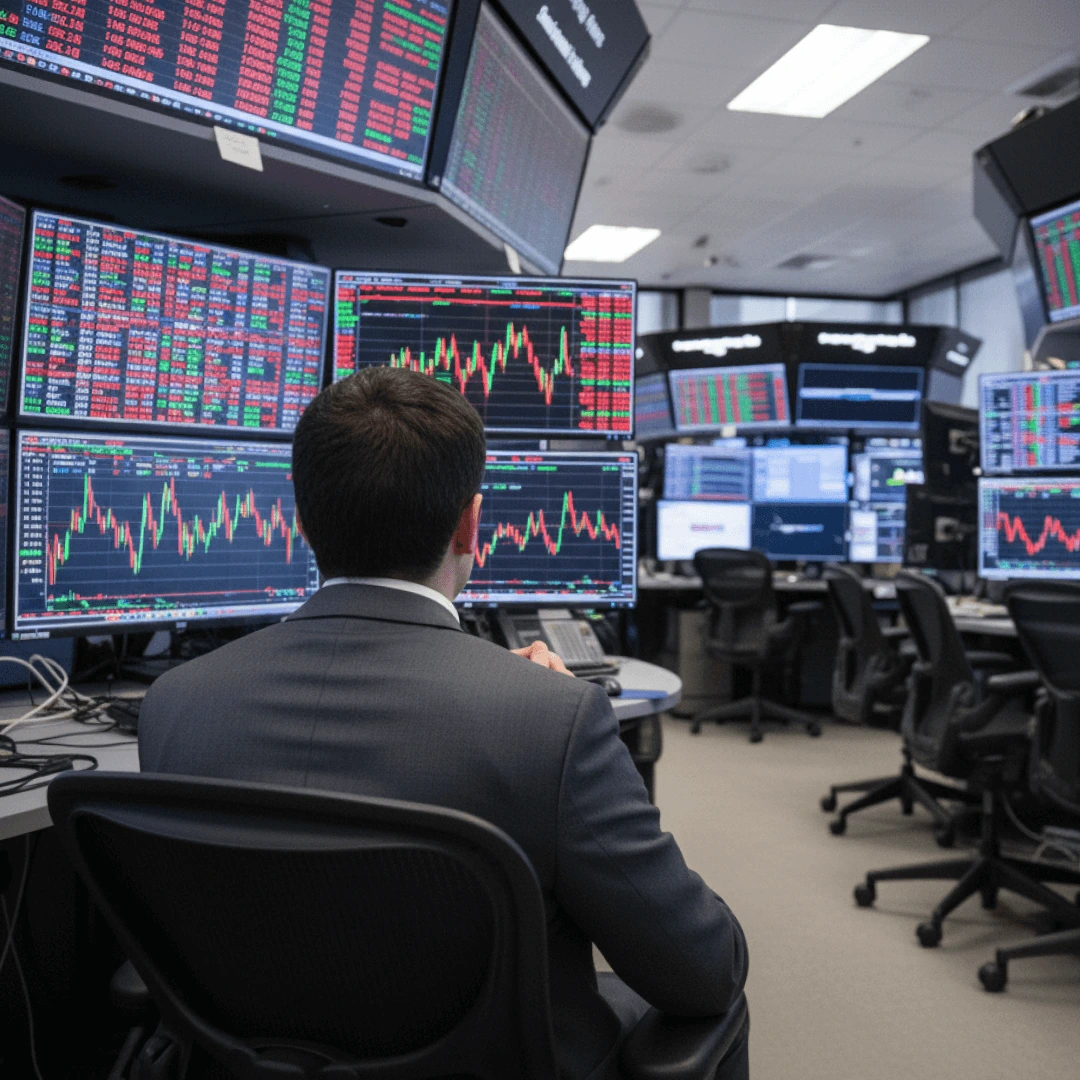
The term 'market volatility' can be defined in a number of different ways. Given how frequently these events make the headlines, they may seem commonplace. However, the most intense episodes of volatility can leave a lasting impression on those who experience them, representing potential losses and causing some investors to temporarily withdraw from the stock market.
In January 2023, on a day like any other, a tweet from Elon Musk caused Tesla’s share price to soar and then plummet within the space of an hour, until the US Securities and Exchange Commission stepped in. In the same year, Credit Suisse – one of Switzerland's largest and oldest banks – saw the value of its shares plummet by over 30% in a single day. This was largely due to a statement from its largest shareholder, who said that he would not be increasing his stake for "regulatory reasons”. Around 48 hours later, its main competitor, UBS, acquired it at a significantly reduced price.
Another extreme case dates back almost twenty years, to when Nokia – then a global mobile phone giant – released its quarterly results at 11 am in Lisbon. On such occasions, the share price would fluctuate by more than 10%, either up or down, in a matter of minutes. Although the company is not part of the German DAX index, its size and relevance in the technology sector caused an indirect contagion effect capable of moving the index by around 2% in either direction. This phenomenon was repeated for several years.
While there’s no doubt that dealing with volatility is a fundamental part of any investment, that doesn't mean you can simply sit back and wait. Find out what market volatility is, and how you can prepare for it.
What is market volatility?
Volatility is defined as the extent to which the price of an asset or market fluctuates within a specified timeframe. The term "volatile” is used to describe sharp fluctuations, up or down, in a short space of time.
These price swings can be influenced by economic or political factors, unexpected events, or even the collective emotions of investors. Margin accounts and stop-losses are additional factors that can cause prices to fluctuate and increase volatility. While for some, volatility is synonymous with risk, for others it is seen as an opportunity.
Understanding volatility isn’t about predicting market movements. It’s about knowing how to position yourself strategically in the face of uncertainty – whether that's to protect your capital or identify the best times to enter or exit the market.
The reasons behind market volatility
Prices tend to fluctuate more rapidly whenever investors have doubts about what will happen to a company, sector, country or the global economy.
The main causes and events are as follows:
• Unexpected economic data, such as higher-than-expected inflation or sharp rises in interest rates;
• Political or geopolitical decisions, such as wars, elections and regulatory changes;
• Disappointing or surprising business results;
• Rumours and market emotions, which intensify movements through mass sales or purchases;
• Technological advances or changes to the business model, which can render companies obsolete or highly valued in the blink of an eye.
Put simply, volatility reflects the market’s perceptions and reactions to an ever-changing world. It’s not necessarily a sign of crisis, but of change. Where there is change, there are opportunities for those who are prepared.
How often does market volatility occur?
Many investors are unaware of how frequently market volatility occurs. Although periods of significant instability may seem unusual when they occur, the truth is that short-term fluctuations are a normal part of the way financial markets work. On average, the main stock indices, such as the S&P 500, undergo corrections (falls of at least 10%) almost every year. This means that sharp price fluctuations, which are often influenced by economic, political or psychological events, are a recurring feature of the market, rather than the exception.
This is why stock exchange operators introduced suspension mechanisms known as circuit breakers. These can last anywhere from a few minutes to a few hours. The aim is to enable investors to process information more effectively while curbing the additional volatility caused by automatic orders, such as stop-losses.
It is important to note that volatility does not necessarily indicate permanent risk; rather, it reflects change. While it can indicate uncertainty, it also reflects positive developments, such as the incorporation of new information into the value of assets. Investors with a long-term view can make more rational decisions and avoid hasty reactions in times of turbulence by understanding the frequency and causes of volatility.
How do you measure volatility?
How can you quantify something that seems so unstable? There are concrete ways of doing it.
• Standard deviation is a measure of how far an asset’s price deviates from the average. A small deviation indicates a relatively stable market. An increase in deviation indicates greater uncertainty and risk;
•The VIX Index, also known as the "fear index”, is an indicator that tracks expected volatility in the US stock market over the next 30 days based on option prices. An increase in the VIX is a sign that investors are anticipating troubled times;
•Beta is an indicator that shows how the price of an asset behaves in relation to the wider market. A beta value greater than 1 indicates that the asset tends to amplify market movements in both directions;
•Historical volatility, which analyses past price behaviour;
•Implied volatility, which is an attempt to predict future events based on investor expectations, as reflected in option prices.
What is a market correction?
A market correction occurs when the price of an asset, such as shares, indices, or other financial instruments, falls by between 10% and 20% from its most recent value or peak. This decline can happen relatively quickly and is seen as a natural adjustment following periods of sharp appreciation.
Unlike a "crash” or a "bear market”, a correction does not necessarily indicate a crisis, but rather a phase of readjustment. During this period, the market revises expectations, corrects excesses, and balances out inflated valuations.
Corrections are often triggered by factors such as:
• Increased economic or geopolitical uncertainty;
•Lower-than-expected business results;
• Changes in monetary policy, such as an increase in interest rates;
• Achieving of profits following periods of strong appreciation.
Although corrections can cause short-term discomfort, they are a natural part of market dynamics and are often viewed as an opportunity for investors to enter the market.
How to invest amid volatility
It is only natural to feel apprehensive when markets start to fluctuate – after all, nobody likes to see the value of their investments drop suddenly. However, volatility does not have to be a cause for concern. With the right strategies in place, it can be managed and even exploited to your advantage.
1. Diversify your risk
The first rule for protecting your capital is to diversify. This means investing in various assets, such as shares, bonds, investment funds across international markets, so that if the value of one asset decreases, the value of another can offset the loss.
2. Keep a liquidity reserve
Another essential tool is to maintain sufficient liquidity. Having some of your portfolio in assets that can easily be converted into cash enables you to react quickly to opportunities or unforeseen events, rather than having to sell at a loss. Volatility also allows for more dynamic strategies, such as the use of ETFs or thematic funds, which enable quicker adjustments to current market conditions. In volatile markets, this adaptability can be a crucial skill for achieving success.
3. Limit your losses
It is also important to consider using stop-loss orders and automatic sell limits. These act as a security system, automatically triggering a sale if an asset falls below a certain price, thereby limiting losses.
4. Invest in stages
Spreading out your investments over time can help to reduce the impact of entering the market at an inopportune moment. Rather than investing all your capital at once, you can make gradual purchases to take advantage of market volatility and improve your average purchase price.
5. Look for hidden value
During periods of high volatility, assets with solid fundamentals often suffer significant falls due to emotional market reactions. These corrections can present opportunities to purchase assets at prices that are more attractive than their actual value.
To distinguish market noise from real opportunities, it is necessary to carefully and informatively monitor and read the markets at all times. At Banco Carregosa, we are committed to promoting financial literacy and monitoring the market closely. This allows our clients to make informed decisions and capitalise on market volatility rather than suffer as a result of it.
6. Identify the dominant sectors of the new cycle
Economic and technological cycles are constantly evolving. Volatility can signal the start of a new phase, during which certain sectors, such as gold, renewable energy, technology and healthcare, grow stronger. By identifying these trends in advance, you can position yourself to take advantage of future growth.
7. Seek specialised support
Having the support of specialists is a key advantage. At Banco Carregosa, our managers keep a close eye on the market and make proactive adjustments to your portfolio to ensure it aligns with your objectives and risk tolerance.
Banco Carregosa is here to help you manage market volatility
Market volatility is a daily challenge for investors, but there is no need to be concerned about it. Armed with the right knowledge, a clear strategy and specialised support, you can protect your assets and seize the opportunities that arise in such situations.
At Banco Carregosa, we are here to help you navigate this complex environment. You can count on us for everything from personalised risk profiling and smart portfolio diversification to access to bespoke financial solutions. We will support you in making informed and safe decisions.
Talk to us to find out how we can use market volatility to your advantage and help your investments grow.