



Stablecoins: What they are and why they matter?


The collapse of the Terra USD (UST) stablecoin in May 2022 shocked the crypto world. Although it promised parity with the dollar, it lost more than 95% of its value in just a few days, causing around 60 billion dollars' worth of market capitalisation to evaporate.
This episode served as a global wake-up call, highlighting that not all stablecoins offer the same level of security. Anyone investing in cryptoassets must understand how they work, what reserves support them and what regulations apply.
This article explores what stablecoins are, their advantages and risks, and strategies for investing with confidence.
What are stablecoins?
Stablecoins are a type of cryptocurrency designed to maintain a stable value. They are usually indexed to fiat currencies, such as the US dollar or the euro. Unlike other cryptocurrencies such as Bitcoin or Ethereum, which are subject to market fluctuations, stablecoins replicate the stability of traditional assets, making them a relatively safe haven in the digital universe.
Stablecoins such as Tether and Circle play a central role in the digital ecosystem. They serve as a store of value and a means of payment, as well as acting as a bridge between fiat currencies and cryptoassets, and are at the heart of many digital financial transactions.
Tether appreciation – Sep 2024 to Jul 2025
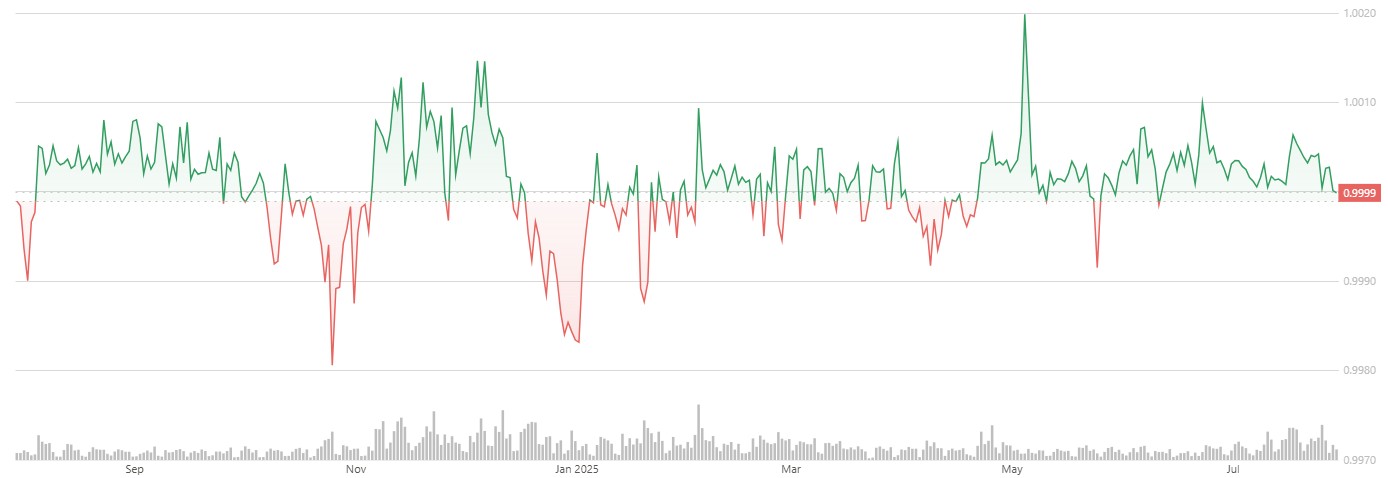
Source: Coindesk
Different types of stablecoin exist, each with a different mechanism for guaranteeing stability. It is essential to know the different types in order to assess the associated risks and benefits:
• Collateralised by fiat currency: each token is backed by real reserves, such as dollars or euros – often US treasury bills – which are deposited in audited accounts. This offers greater confidence, although the quality of the reserves and the rigour of the audits varies between issuers such as Tether and Circle;
• Collaterised by cryptoassets: they use other cryptocurrencies as collateral, with automatic mechanisms to manage volatility, which increases the risk compared to fiat collateral;
• Algorithmic: they maintain parity through algorithms and market incentives rather than physical collateral. This makes them more susceptible to instability, as demonstrated by the collapse of some stablecoins.
The advantages of stablecoins
AStablecoins stand out due to their stability and the functionalities that make them an essential part of digital finance, offering practical solutions for investors:
Stability in volatile markets
The main feature of stablecoins is their parity with fiat currencies such as the dollar or the euro. This minimises the fluctuations typical of cryptocurrencies such as Bitcoin or Ethereum, providing greater predictability.
Simplified access to the cryptocurrency market
Stablecoins act as a gateway to the world of cryptocurrency, allowing investors to convert fiat currencies into digital tokens and transact with other cryptocurrencies quickly and easily, without the need for constant reconversions.
Useful for risk management strategies
During periods of high volatility, stablecoins allow investors to ‘pause’ their investments while remaining part of the crypto ecosystem. This protects their gains and enables them to reposition their portfolio at opportune moments.
The disadvantages and risks of stablecoins
Despite their promise of stability, stablecoins also pose risks that investors should carefully consider. The following four challenges are associated with these assets:
1. Limited stability
The collapse of the Terra USD (UST) has demonstrated that not all stablecoins uphold their promised parity. In particular, algorithmic stablecoins are vulnerable to abrupt devaluations in times of market stress.
2. Lack of transparency and auditing
Some stablecoins, like Tether (USDT), are criticised for the lack of transparency surrounding their reserves. Without regular, transparent audits, it is difficult to guarantee that each token is fully backed, which increases the risk of instability.
3. Regulatory risks
Increasing scrutiny from governments and regulators could result in legislative changes affecting the liquidity, operation or legality of stablecoins in certain markets, which would create uncertainty for investors.
4. Dependence on centralised platforms
Although they form part of the decentralised cryptocurrency ecosystem, many stablecoins rely on centralised issuers, such as companies or foundations. This introduces the risk of bankruptcy, mismanagement, or funds being blocked.
Things to be cautious of when investing in stablecoins
To ensure security and alignment with your financial goals, investing in stablecoins requires strategy and prudence. Below are some practical steps for investing in these assets:
1. Choosing the right stablecoin
The stability mechanism used to create a stablecoin can vary. They can be collateralised by fiat currencies (such as dollars or euros), crypto-assets, or algorithmic (which is riskier). Before investing, evaluate the type and transparency of the reserves and your risk profile.
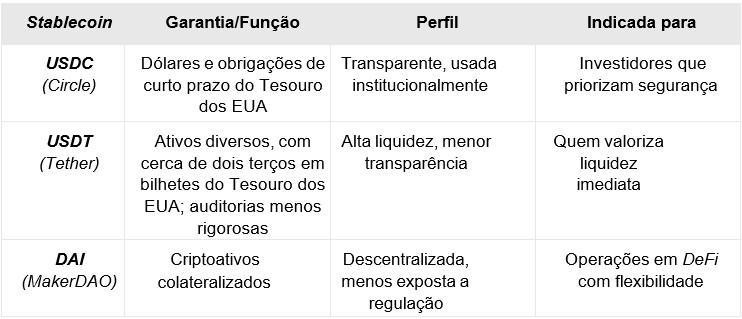
The following table summarises the key information needed to make an informed decision:
2. Choosing a reliable platform
EThere are two main options: using a regulated entity, which is easier to use, or using a decentralised wallet, which is better suited to more experienced users.
Before making the decision to invest, you should seek out all the information you need to know about the situation you are facing.
3. Monitoring, diversifying and protecting
Although they are more stable, stablecoins are still a type of cryptoassets. Therefore, it is important to protect your funds.
• Don't invest all your capital in one stablecoin;
• Regularly check the transparency of reserves;
• Use secure wallets with backups;
• Be wary of promises of guaranteed profits.
Indirect exposure
There are forms of indirect exposure to cryptocurrencies on the market that enable less experienced investors, or those who prefer to remain in ‘more familiar surroundings’ to invest with greater confidence.
For instance, Banco Carregosa provides its clients with access to cryptocurrencies via CryptoFx or ETFs. This instrument allows you to invest in the cryptocurrency market within a banking environment, eliminating the need to seek out unfamiliar institutions.
Strategic monitoring with Banco Carregosa
The world of cryptocurrencies is expanding and transforming the financial markets. Banco Carregosa is closely monitoring the evolution of these digital assets, as well as their impact on the macroeconomic context, monetary policies, and the dynamics of global financial markets.
If you want to better understand the trends and risks associated with these assets and how they might affect your portfolio or strategic decisions, our experts can analyse the most relevant data with you and share an informed, solid and prudent view.
Contact us to find out how our specialised monitoring tools can help you make safer decisions and focus on capital preservation.