



Everything you need to know about investing in gold


At a glance:
• Gold has traditionally been considered a safe-haven asset, particularly during periods of economic uncertainty, high inflation, or volatility in the financial markets.
• Investing in gold can help to diversify a portfolio, as it tends to be uncorrelated with equities and bonds.
• There are many ways to invest in gold, ranging from physical gold to financial instruments, each with different characteristics, costs, and risks.
Gold is a unique asset: it is highly liquid, yet it is scarce; it is both a luxury and a sound investment. In addition, it also acts as a diversifier in the face of stock market volatility. Buying gold can be an effective hedge against inflation and currency risk.
Find out why buying gold has been a popular choice for investors in diverse cultures and in market conditions for centuries.
How has gold performed over time?
Looking at the longer term, we can see that gold has performed remarkably well, especially in recent years, with consecutive all-time highs.
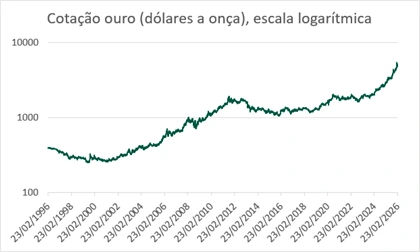
Source: Bloomberg/BancoCarregosa
This chart uses a logarithmic scale to provide a more balanced view of the long-term performance of gold. Unlike traditional scales, this approach allocates the same visual weight to identical percentage changes, regardless of price levels. This makes it easier to identify trends, cycles, and periods of greater or lesser volatility. It also avoids the distortions commonly found in long-term charts that only present nominal values.
Since the turn of the century, the value of this asset has depreciated in only five years, but it has shown significant overall appreciation. It reached an all-time high at the end of 2012 amid the financial crises of 2008 and 2011. After experiencing some difficulties, its value increased again in the early days of the pandemic.
In 2022, shortly after the start of the war in Ukraine, gold reached a new high, driven by overall uncertainty. This was quickly followed by a sharp decline to a 15-month low, penalised by expectations of a sharp rise in interest rates. This indicates that gold, despite its status as a safe-haven asset, is not immune to economic market volatility.
Over the following years, the price of gold increased. Between 2024 and early 2026, it reached new historic highs, fuelled by geopolitical tensions and investor demand for diversification.
"Gold is once again playing a leading role in the global economy. This marks an informal return to the gold standard.” – Paulo Monteiro Rosa, Senior Economist at Banco Carregosa.
Investing in gold: What are the drivers of the price of gold?
The price of gold is influenced by numerous factors:
Dollar value
There is usually an inverse relationship between the value of gold and the value of the dollar, meaning that when the dollar appreciates, gold tends to depreciate and vice versa. This is because gold is priced in dollars, so a stronger US currency makes gold more expensive and reduces demand for it.
Interest rates
Another important factor are interest rates . As interest rates rise, income-producing assets become more attractive, reducing the appeal of gold, which does not pay interest or dividends. On the other hand, when interest rates are low, the opportunity cost of holding gold falls, making this precious metal a more attractive option for investors looking to protect their capital.
Economic context
In times of recession or high inflation, gold is often seen as a safe haven due to its ability to hold its value when other assets, such as equities or real estate, may struggle. Investing in gold during these periods can be an effective strategy for protecting your portfolio from market volatility. The same is true during periods of instability, such as military conflicts or political crises, which tend to push up the price of gold.
Supply constraints
The gold mining industry continues to face structural constraints, such as difficulty in locating new deposits, increasing operating costs, and project delays, all of which are limiting the growth of the global supply. Despite the high prices, production increased only gradually and remained relatively stable in 2025. This shows that supply expansion will remain limited in the short term, meaning that the market may remain tight.
Benefits of investing in gold
From an investor's point of view, there are many benefits to buying gold, in particular that its market value has historically risen and that it also helps to diversify the investment portfolio in a way that is uncorrelated with the financial markets. These are the main benefits of buying gold.
Diversification
Gold is one of the most effective diversifiers, uncorrelated with financial market developments. Historically, gold has been negatively correlated with shares and other financial instruments.
In the 1970s, for example, the price of gold rose when most stocks were falling. The opposite happened in the 1980s and 1990s, which was good for equities but bad for gold. In 2008, the situation reversed again: equities fell sharply as investors migrated to gold. It is therefore recommended that investors diversify by combining gold with other securities in their portfolio.
Owning gold is an effective way of protecting your capital over time
Gold has always been important as a means of transferring and preserving wealth from one generation to the next. Since ancient times, diverse cultures have valued the unique properties of this precious metal. Gold does not corrode, is easy to work with and has a unique colour. But its value does not derive only from its aesthetic. It continues to be sought after by the real economy, in sectors such as technology, the automotive industry and telecommunications.
Protection against currency devaluation
Gold is often considered a safeguard against currency devaluation and inflation. Although the US dollar is one of the world's main reserve currencies and a safe-haven asset in certain contexts, periods of expansionary monetary policies, low real interest rates and greater economic uncertainty have historically led to significant gold price increases. Between the late 1990s and the period following the financial crisis, the price of gold rose sharply in response to the increased demand for assets considered to be a store of value. Gold has a proven track record of preserving value in inflationary environments, as it tends to keep pace with the rising cost of living over time.
There is no sign of demand for gold to slow down
In recent years, demand has been driven by growth in some emerging markets with a strong appetite for gold. In these countries, buying gold is a cultural practice associated with high social status. In China, for example, gold bars are a traditional form of savings and demand has been growing steadily. The decline in property prices has further reinforced gold’s role as a store of value for Chinese savers. India is the world’s second largest gold consumer. The country’s wedding season in October is traditionally the time of year with the highest global demand for gold.
Risks of investing in gold
Although it is often considered a safe-haven asset, investing in gold carries risks that must be properly considered within the context of a diversified portfolio.
The price of gold fluctuates
The price of gold can fluctuate significantly over the short and medium term, influenced by factors such as monetary policy decisions, exchange rate movements, investment flows, and changes in market sentiment. Even in periods of high demand, these fluctuations can affect the value of the investment.
Gold does not generate income
Unlike other investments, gold does not generate periodic income, such as interest or dividends. Rising interest rates can make assets that offer income more attractive, which can reduce demand for gold and put pressure on its price.
Gold is subject to currency risks
Gold is primarily traded in US dollars. For investors whose base currency is the euro, changes in the EUR/USD exchange rate can affect the return on investment, regardless of how the price of gold changes.
The liquidity of gold varies depending on the context
Although gold is a liquid asset, how easily and cheaply it can be converted into cash can vary depending on the instrument used. The liquidity of certain investments may be lower or subject to specific market conditions.
How to invest in gold
There are several ways to invest in gold, each with its own characteristics and suited to different investor profiles.
1. Buying gold bullion directly
Buying gold bullion is a traditional and tangible form of investment. It allows you to own an asset that retains its value over time and is not subject to the fluctuations of the financial markets. However, there are challenges to this form of investment. Secure storage must be considered, which may include vaults or specialised custody services, such as those offered by Banco Carregosa. Liquidity is also an important consideration, as selling physical gold can be more difficult and time-consuming than selling financial assets.
At Banco Carregosa, we buy, sell, store, and withdraw C-Hafner gold bars, the oldest family-owned gold refining company in Germany. These are bars of the highest purity grade on the market, 999.9, packaged in a sealed case with a unique serial number.
Target audience: Ideal for investors who value the security and tangibility of their assets and are prepared to deal with the challenges of storage and liquidity.
2. Investment funds
Depending on the fund manager’s strategy, you may have access to securities from the gold "universe”, such as mining companies or companies related to other precious metals. This allows you to gain exposure to gold and to receive a regular income from dividends that the fund may pay.
Target audience: Ideal for investors wanting exposure to gold without having to buy and store physical gold.
3. Gold Exchanged Traded Funds (ETFs)
ETFs are a convenient and affordable way to invest in gold. These funds track the price of gold, or a related index, without the need to physically own it. ETFs can be bought and sold like shares, making them highly liquid. In addition, the minimum investment can be as low as the price of a single ETF, making them a good option for retail investors. Another advantage is the lower associated cost structure, which tends to be lower than buying physical gold or shares in mining companies.
Target audience: Suitable for retail investors or those looking for a practical and affordable way to invest in gold with liquidity.
4. Shares in mining companies
Investing in shares of companies involved in the mining and production of gold is an indirect form of exposure to this precious metal. These companies can offer income in the form of dividends, especially if they are well managed and have a profit distribution policy. However, this type of investment is not without risk: in addition to fluctuations in the price of gold, profitability can be affected by factors specific to the company, such as its management, operational efficiency, and the conditions of the mines in which it operates. Investing in the shares of mining companies therefore requires careful analysis of the companies in question.
Target audience: Recommended for investors seeking exposure to gold with the potential for dividend income and who are comfortable with the volatility and risks associated with company performance and the mining industry.
5. Gold futures, options, and Cross Currency Pairs (FX)
For more seasoned investors, gold futures, options and Cross Currency Pairs offer a way to profit from future changes in the price of gold. These instruments allow for a high degree of leverage, which can increase both gains and losses. However, they are best suited to investors who understand the market well and have a high appetite for risk, as price movements can be rapid and substantial.
Target audience: Recommended for experienced high-risk investors who are comfortable with speculation and the potential to make and lose substantial amounts of money in a brief period.
Alternatives to investing in gold
While gold may be the best known and most sought-after precious metal with a 6,000-year history, it is not the only one with investment potential. Metals such as silver, iridium and palladium also have their place in the market and can be interesting alternatives for diversifying your portfolio.
Silver
Silver has a long history as a store of value and is widely used in the manufacture of electronics, solar panels, and medical equipment. In addition, silver tends to follow gold in terms of appreciation, albeit with greater volatility, which can provide short-term profit opportunities for more attentive investors.
Iridium
Less well known, but playing a growing role in innovative technologies, one of iridium's greatest attractions is its use in the production of hydrogen, an area that is expanding with the growing demand for cleaner and more sustainable energy solutions.
Platinum
A precious metal to consider as an alternative to gold and with robust growth potential – platinum is increasingly used in fuel cells.
Paladium
Another precious metal with strong industrial appeal, particularly in the automotive sector where it is used in catalytic converters to reduce harmful emissions. Demand for palladium has increased in recent years, driven by the need for more environmentally friendly vehicles, making it a worthwhile investment option.
Step-by-step guide to investing in gold
If you want to invest in gold in an informed and strategic way, follow these steps:
1. Define your objective
Before investing in gold, it is important to have a clear strategy. Are you looking for a store of value to protect your wealth against inflation? Do you want to diversify your investments and reduce your exposure to more volatile assets? Or are you looking for short-term gains from gold’s appreciation? Each of these objectives can lead to different choices in terms of investment format, timeframe, and risk level.
If you are looking for security and stability, physical gold may be a good option. If you prefer liquidity and ease of trading, gold ETFs may be more suitable. If you want exposure to the mining sector and the opportunity to earn additional income, investment funds may be of interest. Defining your motivations from the outset will help you avoid making rash decisions and choose the right strategy for you.
2. Make sure you are comfortable with liquidity
One of the most important aspects of investing is knowing how easily you can convert your investment into cash when you need it. Although physical gold is a safe asset, it can be more difficult to sell quickly. The value you receive will depend on the time of day.
ETFs, on the other hand, are traded on an exchange and offer more agile liquidity, allowing you to buy and sell easily.
3. Consider a phased structure
Trying to predict the exact time to buy gold can be challenging, as the market is influenced by many factors. One strategy you can use to reduce the impact of volatility and avoid timing errors is to buy gradually over time, using a phased approach. By investing a fixed amount in gold at regular intervals – monthly, quarterly, or according to your financial plan – you can adjust the average purchase price.
4. Diversify your portfolio
Despite its advantages, concentrating your investments in a single asset may not be the best solution. Portfolio diversification continues to be one of the basic principles of good investing.
Ideally, gold should be part of a balanced strategy, combined with other assets such as shares, bonds and property. In this way, you can mitigate risk and ensure a portfolio that is more resilient to different economic scenarios.
5. Think long term
Although it is a source of short-term income opportunities, the true value of gold lies in its ability to preserve wealth over the long term. Taking a long-term view means not reacting to momentary market fluctuations and avoiding impulsive decisions based on short-term movements. Gold should be seen as an alternative haven within an investment portfolio, acting as a balance to more volatile assets such as equities.
6. Choose an experienced partner
Whichever way you choose to invest in gold, choosing the right institution to help you makes all the difference. When it comes to physical gold, it is important to make sure you are buying from a certified, market-recognised provider. When investing through ETFs or investment funds, the transparency and soundness of the institution are critical factors in the security of the investment.
At Banco Carregosa, we provide personalised solutions and secure, efficient access to gold investment products.
Banco Carregosa, the support you need to invest in gold
If you’re looking to diversify your investments and protect your wealth in times of uncertainty, investing in gold could be an option.
Our specialised team at Banco Carregosa will help you develop the most suitable strategy for your needs, ensuring the protection and secure growth of your assets. Contact us.
Investing in gold: FAQ
You can find the answers to the most frequently asked questions about investing in gold below.
Why is gold considered a safe investment?
Gold is considered a safe-haven asset because it retains its value during periods of economic uncertainty, inflation, and geopolitical instability. Its scarcity, liquidity and negative correlation with other assets, such as shares, make it an effective wealth protection tool against market volatility.
What are the most effective ways to invest in gold?
The best ways to invest in gold are to buy physical gold in the form of bars or coins, or to invest in exchange-traded gold ETFs, funds in mining companies, futures contracts, or options.
How can I start investing in gold?
To invest in gold safely, you should set clear objectives, such as protection against inflation or diversification, and choose certified suppliers of physical gold. You should also consider ETFs for greater liquidity and lower costs, diversify your portfolio by combining gold with other assets, and consult professionals such as the team at Banco Carregosa for a personalised strategy.