



Everything you need to know about investing in AI


At a glance:
• Artificial intelligence is transforming various sectors of the economy and is becoming an increasingly relevant topic in financial markets.
• Investment in AI is possible through stocks, ETFs or funds that offer exposure to companies involved in the development and application of this technology.
• Investing in AI carries with it a certain amount of risk and volatility, so it is important to do your research and make informed decisions, and to make sure it is part of a well-diversified strategy.
With all the recent news about artificial intelligence, you may be wondering whether it's worthwhile to put your money into it.
Everyone is talking about AI and saying that it is "the future”, but few people explain how investors can benefit from it.
So, is it worthwhile investing in AI? Which companies? Through shares, ETFs or investment funds? And how can you distinguish real opportunities from mere marketing hype?
Potential benefits of investing in AI
To understand the hype surrounding investment in AI, it is worth examining some figures. Most projections indicate that the global AI market will experience significant growth. It is currently estimated to be worth around $638 billion, with data suggesting it could reach $3.6 trillion by 2030, equivalent to a compound annual growth rate of approximately 20%.
Estimated growth in the global AI market value (CAGR of 36%)
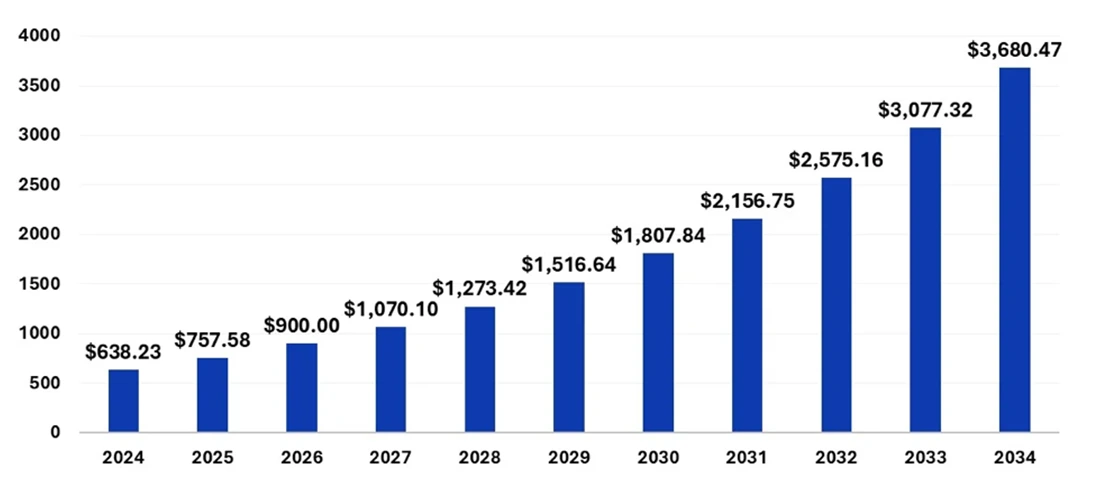
Source: Precedence Research
For comparison, USD 3.6 trillion is roughly equivalent to Germany’s annual GDP and larger than Japan’s economy in recent years. This figure is higher than that of entire sectors, such as the global automotive industry or the global renewable energy market today.
Other "fast-moving” sectors, such as e-commerce and cloud computing, have historically grown by between 10% and 15% per year during their periods of greatest expansion. This helps to explain why so many investors are paying attention to AI.
"AI has become one of the main drivers of stock market growth in the US, creating a visible wealth effect even before productivity increases are reflected in the real economy.” - Paulo Monteiro Rosa, Senior Economist at Banco Carregosa.
Pitfalls of investing in AI
Although investing in AI technology offers immense potential, there are also challenges and risks that you should be aware of before proceeding. To invest wisely, you need to be aware of both the opportunities and the possible obstacles that you may encounter.
Market volatility
The technology sector, and AI in particular, can experience significant price fluctuations. News, quarterly results, and regulatory changes can cause the investment values to rise and fall rapidly.
High valuations
The valuations of many AI companies are high based on future expectations. However, if these expectations are not met, however, the share price could fall significantly.
Reliance on technological development
Not all companies can keep pace with innovation. Some technologies can quickly become obsolete, which has a negative impact on companies that are unable to adapt.
Regulatory and ethical risk
The development of AI raises a number of legal and ethical issues, including data privacy and the responsible use of technology. Some companies may find that new regulations hinder their growth or increase their operating costs.
Where should you invest in AI?
There are several ways to invest in artificial intelligence that are tailored to each investor profile without the need to purchase individual shares in tech companies.
1. Technology and AI investment funds
Many investment funds offer exposure to companies that develop or use AI to a significant extent. These investment funds enable you to spread your risk by investing in a range of leading companies within the sector.
Conduct a more detailed search on the funds available using the Morningstar investment screener, which is available on the Banco Carregosa website.
2. AI-themed ETFs
AI-themed ETFs (Exchange-Traded Funds) enable you to invest in a single position that track the performance of an index or group of companies associated with artificial intelligence. They are a practical option for investors who want exposure to the sector but do not want to pick individual stocks.
Examples include ETFs that track leading AI companies such as NVIDIA and Meta, as well as businesses operating in sectors such as healthcare, energy, and cybersecurity that use AI. Investing in these ETFs allows you to diversify your portfolio within the AI theme, thereby reducing risk and providing a more balanced approach to tracking the sector’s growth.
3. Technology and innovation indices
Another way to benefit from the growth of artificial intelligence without depending on the performance of a single company is to invest in technology or innovation indices (through ETFs or funds).
You may have heard of the Nasdaq-100, which comprises technology giants such as Microsoft, Nvidia and Meta, or the MSCI World Information Technology Index, which is centered on leading global tech companies. In Europe, the STOXX Europe 600 Technology Index provides exposure to leading European companies in the software, chip, and digital services sectors.
In other words, buying a stake in a fund or ETF that tracks one of these indices gives you indirect exposure to AI. The performance of your investment reflects the growth of the sector, including AI companies, rather than focusing solely on them. This is a practical approach to diversification and risk reduction that allows you to benefit from technological developments in a balanced way.
4. Direct investment in shares of an AI company
Investors who prefer greater control and personalisation when investing in artificial intelligence naturally choose to purchase shares in companies directly linked to this field.
This strategy allows you to pick companies with quite distinct roles in the AI ecosystem, which can be split into several layers:
• AI platforms and model development: companies that develop AI models, algorithms, and applications for everyday products.
• Infrastructure, cloud computing, and processing power: AI requires enormous processing power, so these companies are fundamental to the growth of the sector;
• Hardware and semiconductors: AI simply does not exist without specialised chips. This is one of the most critical areas;
• Vertical applications (AI applied to specific sectors): Consider companies that use AI to solve specific problems in areas such as healthcare, finance, cybersecurity, and industry
How to invest in AI
Having analysed the potential of artificial intelligence and where to invest in it, the next step is to understand how to invest in AI in a practical way. Below are some best practices.
1. Define your objectives and risk profile
Before you invest, it is important to understand your risk profile and what you are looking for: rapid growth, diversification or a long-term investment. As AI can be volatile, you should adjust your level of risk exposure.
2. Choose the type of investment
Choose the type of investment that best matches your risk tolerance and specific goals:
• Company shares: higher risk, higher potential return.
• Specialised funds: moderate risk, automatic diversification.
• ETFs and indices: lower relative risk and easier to track the market.
3. Research and analysis
Analyse the growth history of companies, the technology they develop, and their ability to generate profits. In terms of investment funds and ETFs, check which companies are included, the management team, and how they have performed in the past.
4. Open an investment account with a bank
Choose a reliable platform that offers access to global stocks, funds, and ETFs. With Carregosa NextGen, for example, you can manage all your investments in one place and receive specialised support.
5. Use a simple, intuitive platform
Invest in AI-related companies and financial instruments in major international markets using the GoBulling Investor platform. Simple, practical and with a modern touch, this platform is intended to make every transaction easier. Thanks to its straightforward design, it is the perfect choice for investors seeking an intuitive, reliable experience without compromising on quality.
6. Monitor and adjust as necessary
The AI sector is changing rapidly. Keep up to date with the latest trends, new technologies and company results, and adjust your portfolio accordingly.
Is investing in AI right for you?
Investing in AI can be a good idea if you have a medium- to long-term investment horizon and are happy to accept some volatility. While this rapidly evolving sector has high growth potential, it is also subject to fluctuations related to the pace of technological innovation and market expectations.
Although there are opportunities, investments linked to artificial intelligence can be subject to periods of greater instability, particularly during market corrections or regulatory change. Therefore, this strategy is better suited to those who do not need capital in the short term and can adopt a long-term perspective, even in uncertain situations.
However, investing in AI may not be the best option if you are looking for immediate stability or predictable returns, or if your portfolio already has significant exposure to the technology sector. Before moving forward, it is important to consider your financial goals, risk tolerance, and the level of diversification in your portfolio. Rather than following trends, you should decide whether investing in AI aligns with your profile and financial strategy.
Investing in AI with Carregosa NextGen
Understanding the various investment opportunities in AI is important, but having an investment framework in place and conducting ongoing monitoring is essential for managing risk and maximising the potential of this evolving sector.
At Carregosa NextGen, you can invest in artificial intelligence through shares, investment funds and ETFs, which include some of the world’s leading technology and innovation companies.
Contact us to find out how you can integrate AI investment into a more informed and diversified strategy that is tailored to your risk profile.
Investing in AI: FAQ
You can find the answers to the most frequently asked questions about how to invest in AI below.
How much money do I need to invest in AI?
There is no set minimum. You can start by investing small amounts in ETFs or investment funds, and then increase this amount as you become more comfortable with the process.
Is it safe to invest in AI?
As with any investment, whether in stocks or technology, there are risks associated with investing in AI. The key is to diversify and adopt a long-term perspective.
Are AI-related ETFs worth it?
Yes, they are ideal for those seeking diversification and simplicity. They allow you to invest in several companies within the same sector simultaneously, which is less risky than investing in individual stocks.
Which are the best AI funds?
It depends on your profile and objectives. Some global funds invest in leading AI companies, while others invest in start-ups. You should always research the fund’s fees, track record and composition.
Which is the better investment option: funds or ETFs?
It depends on your profile and objectives. In addition to the different investment policies of funds and ETFs, you should consider the cost of each instrument and how this could affect your investment. For more information, see this article.