



New York Stock Exchange (NYSE): What it is and how to invest in it

At a glance:
• With around $28 trillion in listed companies, the New York Stock Exchange (NYSE) is the world’s largest stock exchange (equities market) by market capitalisation.
• Investing in the NYSE provides direct access to well-established multinational companies such as Coca-Cola, Visa, Mastercard, Disney, Walmart, Nike, Pfizer, Spotify, and Uber.
• If you are based in Portugal, you can invest in NYSE shares and ETFs via Carregosa NextGen and the GoBulling Investor. platform. These are both regulated in Portugal and offer transparent tax treatment.
Every working day at 2:30 pm, the bell rings in Lisbon to open the world’s largest stock exchange. It has a history stretching back 234 years, over 2,000 listed companies, and a market capitalisation of nearly $30 trillion.
The New York Stock Exchange (NYSE) is much more than just an icon of Wall Street. Not only is it the world’s largest stock exchange by market capitalisation, but it is also the stage on which some of the most influential companies in the global economy are traded. For investors in Portugal, it is also a gateway to geographical diversification and exposure to the US dollar
This article explains what the NYSE is, how it works and how it differs from the NASDAQ. It also covers the trading hours in Lisbon time and the applicable tax regime in Portugal, as well as how you can invest with Carregosa NextGen.
What is the New York Stock Exchange?
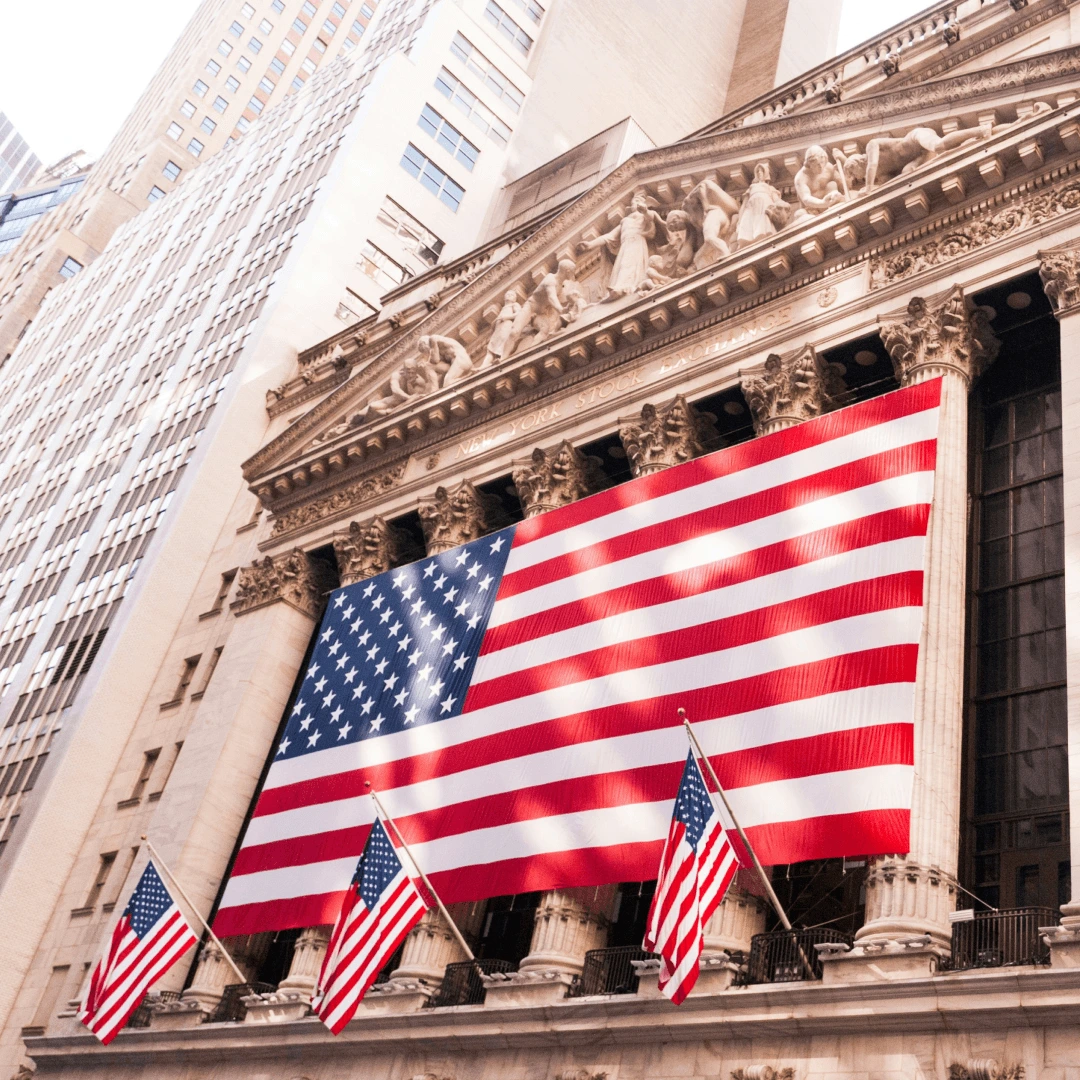
Founded in 1792, the New York Stock Exchange (NYSE) is the world’s largest stock exchange by market capitalisation and is headquartered on Wall Street. With over 2,000 listed companies, both American and international, across sectors such as industrial, financial, energy, consumer goods, and healthcare, it is the world’s largest stock exchange by market capitalisation.
The list of companies includes well-known names such as Coca-Cola, Visa, Mastercard, Disney, Walmart, Nike, Pfizer, Spotify, Uber, IBM, and JPMorgan. Many European and Asian multinationals are also listed on the NYSE via ADRs (American Depositary Receipts), which are certificates representing shares in foreign companies that are traded in dollars.
The NYSE Composite (NYA) is the main stock market index, comprising all listed ordinary shares. Other associated indices include the Dow Jones Industrial Average, which comprises 30 major industrial companies, and, although not exclusive to the NYSE, the S&P 500, which brings together the 500 largest US companies listed on the NYSE and NASDAQ. You can read our article on "S&P 500: what it is and how you can invest in it".
How the NYSE works: market makers and the hybrid model
Unlike the NASDAQ, which is entirely electronic, the NYSE operates using a hybrid model, combining electronic trading with a human presence on the trading floor.
The central player in this model is the Designated Market Maker (DMM). This professional is responsible for ensuring liquidity and order when trading each share. The DMM’s involvement occurs at three pivotal points:
• Opening auction: it aggregates all orders accumulated overnight and sets the opening price.
• Intraday liquidity: ensures that counterparties are available when the market is under stress.
• Closing auction: it is one of the day’s highest-volume events. This is where the official closing price is set, which is then used by ETFs and funds to value portfolios.
The opening bell, which rings at 9:30 a.m. New York time, marks the start of the trading session. It is one of the most recognisable rituals in the world of global finance.
Opening hours of the NYSE in Portuguese time
The NYSE is open from Monday to Friday, from 9:30 am to 4:00 pm Eastern Time (ET), except on public holidays. Opening hours in Portugal (Lisbon):
• Summer (March to October): from 2:30 pm to 9:00 pm.
• Winter (November to March): from 2:30 pm to 9:00 pm if Portugal and New York are on the same time, or from 3:30 pm to 10:00 pm during the two- to three-week period when only Portugal has changed its time.
There are also extended trading sessions: pre-market (from 4:00 am to 9:30 am ET) and after-hours (from 4:00 pm to 8:00 pm ET), which have lower liquidity and higher volatility.
NYSE vs. NASDAQ: main differences
| Feature | NYSE | NASDAQ |
|---|---|---|
| Founded on | 1792 | 1971 |
| Trading model | Hybrid (electronic + physical trading floor) | 100% electronic |
| Dominant types of companies | Industrial, financial, energy, consumer | Technology, biotech, growth |
| Examples | Coca-Cola, Visa e Mastercard, Disney, Walmart, Nike, Pfizer, Spotify, Uber | Apple, Microsoft, Alphabet, Amazon, NVIDIA |
| Market capitalisation | ˜ $28–30 trillion as at May 2026 | ˜ $30–33 trillion as at May 2026 |
| Average daily volume (number of shares) | Lower than NASDAQ | Higher than the NYSE |
Although both are American and regulated by the Securities and Exchange Commission (SEC), they cater to different types of companies. The NYSE is home to blue-chip companies with a long track record. Meanwhile, the NASDAQ is the natural habitat for technology firms and rapidly growing companies.
Advantages of investing in the New York Stock Exchange
Thanks to its four strategic pillars, the New York Stock Exchange (NYSE) stands out from other global markets, benefiting both institutional and retail investors:
1. Access to global leaders: well-established multinationals with a presence in dozens of countries and a decades-long track record. For a portfolio focused on European assets, the NYSE offers diversification across sectors and regions that cannot be replicated in Lisbon, Paris, or Frankfurt.
2. High liquidity: the substantial trading volume on the NYSE enables large orders to be executed with tight bid-ask spreads. This results in lower implicit entry and exit costs for retail investors.
3. Transparency and regulation: the SEC enforces rigorous quarterly (Form 10-Q) and annual (Form 10-K) reporting obligations. This gives investors access to audited, comparable, and publicly available financial information.
4. Exposure to the dollar: the USD is a reliable store of value during periods of risk aversion. Investing on the NYSE also involves currency considerations, offering both advantages and risks.
The NYSE can form a key part of your international portfolio, providing exposure to European and emerging markets as well as different asset classes.
Risks of investing in the New York Stock Exchange
Despite its size and importance, investing in the New York Stock Exchange (NYSE) can be risky. These are the main risks.
1. Market risk: the value of listed shares fluctuates in line with economic cycles, the monetary policy of the Federal Reserve and geopolitical events. Even blue-chip stocks can experience significant corrections.
2. Currency risk: you are investing in dollars. If the euro appreciates against the dollar, this could reduce the value of your investment. The reverse may amplify them. This is currency exposure, not a benefit.
3. Volatility: although companies listed on the NYSE are generally less volatile than those on the NASDAQ, the NYSE is not immune to corrections. Events such as those in 2008 and 2020, as well as sector-specific corrections, demonstrate that size does not necessarily equate to stability. Read our article on market volatility for more on this topic.
4. Geographical concentration: although many companies listed on the NYSE have a global presence, the exchange's performance is closely tied to the US economy, domestic US consumption and decisions made by the Fed.
5. Political risk and tariffs: US trade policy and tariffs, as well as geopolitical tensions, have a direct impact on multinationals listed on the NYSE, particularly those in the manufacturing, automotive and semiconductor industries.
6. Sector-specific regulatory risk: examples include antitrust, AI regulation, energy regulation, and corporate taxation. This is particularly relevant for sectors with significant weighting on the NYSE, such as financial services, healthcare, and energy.
How to invest in the NYSE from Portugal
1. Define your objective and time horizon
Geographical diversification? Long-term capital growth? Exposure to the dollar? The NYSE can fulfil all three, but achieving each objective requires different choices to be made regarding assets, allocation, and time horizon. The first step is to determine your investor profile.
2. Choose the instrument
• Individual shares: they offer direct exposure to a specific company. This requires fundamental analysis and monitoring. Higher potential return and higher specific risk.
• ETFs: they track an index or sector, offering immediate diversification, passive management, and low costs. In practice, however, there are no ETFs that track the NYSE directly. Consequently, European investors typically gain exposure to it via S&P 500 or MSCI USA ETFs.
Note: It is important to note that index tracking does not eliminate the market risk associated with the underlying assets. Additionally, the actual returns depend on factors such as the fund’s annual management fee and tracking error.
Should I opt for direct NYSE exposure or via a global ETF? Which would be Better to start with?
You may be wondering::" If the major NYSE companies are already included in the S&P 500 or a global index such as the MSCI World, why should I buy individual shares?".
That’s an excellent question. The answer is simple: for most people, an ETF is often the starting point.
ETFs offer a valuable opportunity for those looking to build wealth from scratch:
• Immediate diversification: you spread the risk of a single company failing by investing in a variety of assets.
• Low entry barrier: you can gain exposure to Wall Street with smaller investments.
Buying shares directly often comes in a second phase, when you want to invest selectively, for example by picking stocks:
1. Leverage Specific Investment Themes: investing with a strong focus on conviction-based ideas in an attempt to outperform the market average.
2. Generate targeted passive income: selecting the top dividend-paying companies directly.
3. Seize opportunities: buying excellent businesses at a discount during market corrections.
With the GoBulling Investor Platform, you can explore the market at your own pace and select one of these two investment options, choosing the strategy that best suits your current situation.
3. Analyse before you buy
When it comes to individual shares, look beyond a company’s brand recognition. Consider factors such as recurring revenue, margins, free cash flow generation, debt levels, and competitive advantage. A dip in the price of a blue-chip share could present an opportunity or indicate a structural problem. The difference lies in the fundamentals, not the price. Read our guide to financial analysis in practice to find out more.
4. Consider Portuguese tax rules
These are aspects that are often underestimated and cause many investors to stumble:
• Capital gains: the profits from your sales are taxed at a flat rate of 28% in Portugal (or the applicable rate in your autonomous region if you reside in the Azores or Madeira). However, you have the option of including them in your personal income tax return if your tax bracket is lower. However, you should always consult your accountant.
• Dividends: the US automatically withholds 30% tax on dividends paid to non-resident investors. However, under the Double Taxation Agreement between Portugal and the US, this rate can be reduced to 15% if you submit Form W-8BEN. You should check with your financial intermediary regarding the availability of this form and how to complete and submit it.
5. Include it in a diversified portfolio
The NYSE should not constitute your entire portfolio. Reducing specific risk over time requires you to combine geographies (Europe, the US, and emerging markets), asset classes (equities, bonds, and alternatives) and sectors.
6. Be strict
Crises, market corrections, and media hype are all part of the process. The difference between investing and speculating lies in the consistency of your analysis and decision-making processes.
Investing in the NYSE with Carregosa NextGen
With Carregosa NextGen, you can access the NYSE via the GoBulling Investor Platform, which offers shares and ETFs from major international markets.
With over 190 years of history, Banco Carregosa is a well-established institution, Regulated by Banco de Portugal (under no. 0235), and the CMVM (under no. 0169). It is also the longest-standing international partner of Saxo Bank, with over 20 years’ experience in the electronic trading of global financial instruments. This combination provides direct access to international markets while offering the regulatory and tax security of a Portuguese bank.
Are you ready to start? Contact us to find out how to take the next step.
NextGen Glossary
• Opening bell: the bell that officially opens trading on the New York Stock Exchange every working day at 14:30 Lisbon time.
• Blue chips: shares in large, well-established, and highly stable companies (e.g. Coca-Cola or Visa). The term comes from poker, where it refers to the most valuable chips.
• DMM (Designated Market Maker): a human specialist on the NYSE trading floor whose job it is to ensure that there are always buyers and sellers for a given share.
• Bid-ask spread: the difference between the highest buying price (the "bid”) and the lowest selling price (the "ask”). This is a hidden cost of the transaction.
• Free cash flow: the net amount of cash remaining in a company's accounts after all expenses and investments have been paid. It is essential for growth.
• ADR (American Depositary Receipt): a certificate that enables you to purchase shares in non-US companies directly on the NYSE in US dollars.
• Withholding tax: tax charged and withheld by the government immediately when you receive a dividend payment.
• Aggregation of returns: an option on your tax return that allows you to add investment gains to your salary. This means that you will pay tax based on your total income bracket, rather than at the flat rate of 28%.
FAQs about the NYSE
We’ve answered some of the most frequently asked questions about the New York Stock Exchange (NYSE) below.
What is the difference between the NYSE and the NASDAQ?
The NYSE focuses on more established and traditional companies in the industrial, financial and consumer sectors. It operates on a hybrid model involving human market makers and a physical trading floor, and it was founded in 1792. In contrast, the NASDAQ is fully electronic, was founded in 1971, and dominates the technology sector (home to companies such as Apple, Microsoft, and NVIDIA).
Can I invest in the NYSE from?
Yes. You can do so through a bank or broker with access to international markets.
What are the opening and closing times of the NYSE in Portugal?
During summer, the NYSE operates from 2:30 pm to 9:00 pm Lisbon time. During winter, it generally operates from 2:30 pm to 9:00 pm, except during the period when Portugal is the only country to have changed its time, when it switches to 3:30 pm to 10:00 pm.
How much do I need to start investing on the NYSE?
It depends on the asset. The NYSE includes blue chips priced both below and above USD 50 and USD 700,000 per share respectively, but ETFs allow you to start with more affordable amounts.
Do I need to declare my investments on the NYSE on my tax return?
Yes. Any capital gains or dividends from foreign assets must be declared.
What are ADRs?
ADRs (American Depositary Receipts) are certificates representing shares in foreign companies that are traded on the NYSE in US dollars. They enable you to invest in multinational companies.
Disclaimer: This article has been prepared by Banco Carregosa for informational and educational purposes only. It does not constitute an investment proposal or recommendation to buy, nor does it constitute personalised financial advice. Investing in financial instruments carries risks, including the possibility of losing your initial investment. Past performance does not guarantee future results. Before making any investment decisions, we recommend that you consult an account manager or financial adviser to ensure that they are suitable for your risk profile and financial objectives.