



Payback: What it is and how to calculate it

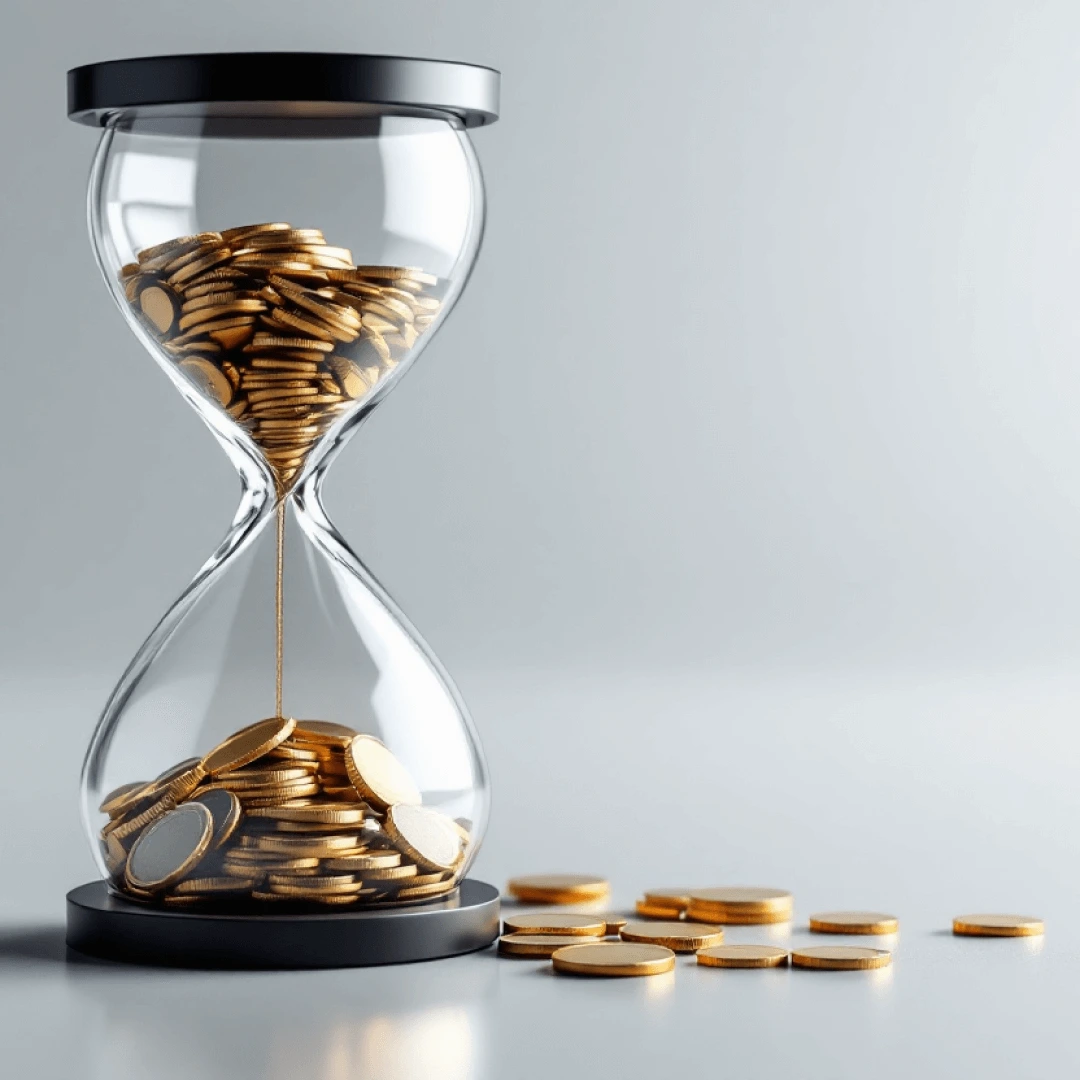
When it comes to investments, the first question to ask is: "How soon will I get my money back?” Payback provides the answer. This simple, accessible indicator clearly shows the viability of an investment, whether that’s buying a property, investing in a business project, or investing in the financial markets.
Those without a background in finance will also find it easy to understand. Payback acts as an initial filter for more in-depth analysis. Although it’s not perfect, it’s a valuable tool for avoiding rash decisions. This article explains exactly what payback is, how to calculate it step by step, and when to use it.
What is Payback and how is it calculated?
Payback measures the time it takes to recover the amount invested, based on the cash flows generated by the investment. Put simply, it shows how many years (or months, etc.) it will take to reach a profit of zero, i.e. for the accumulated return to equal the initial amount.
The simple payback formula is used for constant cash flows:
Payback = Initial investment / Annual cash flow
This method, also known as the "undiscounted” method, does not consider the time value of money, such as inflation or opportunity cost. Nevertheless, it is useful for assessing risk and payback periods, particularly for short- to medium-term investments or when liquidity is a priority.
Example: You invest €5,000 in a small business which generates a net profit of €1,000 per year.
Payback = €5,000 / €1,000 /year = 5 years
It takes five years to recoup your investment, after which subsequent flows become profit.
For variable flows or more rigorous analyses, use the discounted payback method, which adjusts future values by applying a discount rate that reflects the time value of money.
Advantages of Payback
Payback is an excellent starting point for comparing investments:
• Quick risk assessment: Investments with a short payback period (e.g. less than five years) are less risky, as the capital is recovered more quickly;
• Simplicity: Easy to calculate and understand, even for beginners. This facilitates decision-making and discussions with partners;
• Focus on liquidity: Ideal for times of economic uncertainty when it is crucial to be able to recover capital quickly.
Limitations of Payback
Although it is a good starting point, the payback method has several limitations that it is important to bear in mind before making any decisions:
• It ignores the time value of money: Simple payback does not adjust for future cash flows, which means it underestimates the impact of inflation or opportunity cost;
• It disregards profits after payback: It does not evaluate returns after capital has been recovered, which may result in long-term investments being undervalued;
• Imprecision with irregular flows: This method is less effective when returns vary significantly over time.
For this reason, a complete analysis should combine payback with indicators such as Net Present Value (NPV) or Internal Rate of Return (IRR).
How to calculate Payback
For this metric to be useful, it is essential to calculate it rigorously and interpret it in the right context. Here’s a step-by-step guide to help you do it in a practical and informed way:
1. Start by identifying the amount of your initial investment
This may seem obvious, but the first step is to ensure that you have a clear idea of how much you are going to invest. The initial investment is the starting point, whether it’s a bond, a structured fund or another product.
Also consider any commissions, charges or subscription fees. Anything you take out of your pocket counts towards the total.
2. Estimate future return flows
Now it's time to look ahead. What do you expect to receive, and how often? We're talking about net flows here, i.e. what actually comes in, free of taxes and commissions. These could include periodic coupons, dividends, capital income or scheduled repayments.
The secret lies in ensuring the projections are realistic: don't be too optimistic. Working with conservative scenarios or with several different scenarios helps you to make more cautious and sustainable decisions.
3. Calculate the Payback
The aim is to determine the point at which the total return equals the initial investment.
Example: If you receive €1,000 a year and have invested €3,000, the payback will take 3 years.
However, the returns are often not uniform: you may receive more in one year and less in another. In these cases, calculate the average annual return.
4. Interpret the results
Calculating the payback period is just the first step. The final step is to ask:
• Does this payback period match my investment timeframe?
• Am I comfortable with how long my capital will be tied up?
• Am I also interested in the total return after payback?
Although payback helps you assess the potential liquidity of an investment, it should always be analysed alongside other indicators and in relation to your investor profile.
Best practice for interpreting Payback
Although payback is a useful tool, it is not an oracle. On its own, it doesn’t tell you whether the investment is a good one. It only shows how long it will take for you to get your investment back. We’ve put together some good practices below to help you make the most of this metric and avoid simplistic or biased interpretations:
1. Never analyse Payback on its own
Use payback as a complement, never as the sole criterion. If you are evaluating more dynamic products, combine it with metrics such as annual profitability, total return or even volatility.
2. Contextualise the timeframe
The prospect of a short payback period may be appealing; after all, who wouldn’t want to recover their capital quickly?
However, be aware: investments offering very fast returns may involve higher risks, be less stable, or offer limited long-term gains.
Before being seduced by the prospect of a few months’ payback, consider the bigger picture: the risk profile, the predictability of cash flows, and what will happen once you have recovered your capital.
3. Adjust the horizon according to your objectives
If you are investing with a specific objective, for example to strengthen your retirement fund or diversify your portfolio in the medium term, you should consider the payback in relation to that timeframe. If your strategy is long term, an investment with a 6-year payback can make perfect sense. If this is not in line with your financial objectives, avoid making rash decisions based on short timeframes.
4. Remember that time is also valuable
Two investments with the same payback period can be very different from each other. One may pay off more at the start; the other may concentrate everything at the end. Even if the payback period is the same, the value of time is not. As long as the quality of the investment is maintained, getting paid sooner is generally better.
5. Review the Payback period regularly
Nothing is static. Expected returns can change. The economic context, the behaviour of the issuer and regulation are all things that can influence what once seemed guaranteed.
It is a good habit to recalculate the payback based on new information, particularly for investments with longer durations or variable characteristics.
Additional information regarding the Payback method
Although the payback method is useful for understanding how quickly an investment will be recouped, it provides only a limited perspective. In order to make more informed and strategic decisions, it is important to use indicators that analyse not only time, but also the value, profitability and risk of the investment over time.
The following section outlines the primary complements to payback, each of which serves a distinct and complementary purpose:
Discounted Payback
The discounted payback is a more accurate version of the original indicator because it takes into account the fact that money has different values at different times. Rather than adding up the cash flows as they are received, a discount rate is applied to calculate their current value.
This method provides an answer to the question:
"How many years will it take me to recoup my investment, given that today's money is worth more than tomorrow's?”
To perform the calculation, add together the present values of the cash flows until they equal the initial investment value. The number of periods required is equal to the discounted payback period. This indicator is particularly useful for comparing investments in contexts involving inflation, high risk or significant interest rates.
Net Present Value (NPV)
The Net Present Value (NPV) is a measure of the total value of an investment, calculated by discounting all future cash flows based on a discount rate (e.g. the cost of capital). A positive NPV indicates that the investment should generate economic value over time.
Basic formula:
NPV = S (Cash Flow / (1 + rate)^n) – Initial Investment
The NPV allows investments with different durations to be compared and evaluated based on whether the potential return justifies the associated risk and capital. It is particularly useful for making medium- to long-term decisions.
Internal Rate of Return (IRR)
The IRR is the effective rate of return on an investment, i.e. the discount rate at which the NPV of an investment is equal to zero. It shows you the expected percentage return over time.
In principle, an investment is viable if the IRR is higher than the cost of capital. This indicator is particularly useful when it comes to comparing projects with different investment volumes.
Profitability
The Profitability is defined as the ratio of the present value of cash flows to the initial investment. An IRR greater than 1 indicates that the investment generates more value than the initial capital invested.
Formula:
Profitability = Current Value of Cash Flows / Initial Investment
This indicator provides an effective means of evaluating the efficiency of capital investment, particularly when several proposals have similar budgets.
GoBulling Pro: Your investment evaluation tool
With access to over 40,000 financial instruments across 30 global markets, the GoBulling Pro Trading Platform from Banco Carregosa is the perfect tool for evaluating and managing your investments. GoBulling is a multi-access, multi-product and multi-currency platform offering trading in shares, ETFs, CFDs, Forex, Futures, Options and much more. It has an intuitive interface that can be accessed via app or browser. Offering advanced charting tools, multi-screen support, position management and margin reports, it enables you to analyse various profitability and risk indicators in real time. Try the DEMO version.
Payback is just the beginning: Build the rest with Banco Carregosa
Although payback is simple, straightforward and useful, it is only one piece of the puzzle. It helps you realise how long it will take for an investment to return the capital invested, but it doesn’t tell you everything about its potential, risk or profitability. It should always be read in context and incorporated into a broader analysis.
At Banco Carregosa, we help investors do just that: assess opportunities rigorously, weigh up risks, and make well-founded decisions. Investors have access to personalised analyses, monitoring, and solutions tailored to their profile and objectives.
Talk to your Account Manager or explore our investment solutions. Asking the right questions is the first step towards making an informed decision.