



A guide to buying gold bars

At a glance:
• Traditionally, buying gold bars has been a way of investing in physical gold and preserving value in times of uncertainty.
• The price of gold bars is determined by the international gold price, exchange rates, weight, purity, and trading costs.
• Before buying gold bars, it is important to familiarise yourself with the associated advantages, risks and practical considerations relating to storage, liquidity, and security.
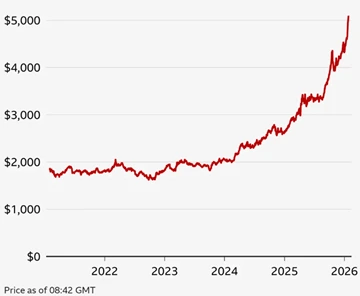
The average price of gold in 2016 was around $1,250 per ounce. In 2026, the price of the metal remains at historically high levels, confirming the long-term trend of appreciation, with prices exceeding $5,200 per ounce on several occasions in recent years.
This means that the value of gold has quadrupled over the last ten years. In practice, an investment of €10,000 in physical gold in 2016 could be worth more than €40,000 today, depending on when the purchase and sale were made. This growth reflects the strong demand for gold as a ‘safe haven’ during periods of high inflation, low or negative real interest rates, and a weak US dollar. These variables, alongside economic instability and geopolitical tensions, have historically driven the price of this precious metal.
What do you need to know before investing in gold?
Read our article and discover why gold has historically been a recurring choice for investors in different cultures and market contexts.
To put the scale of this growth into context, it is important to compare it with that of other benchmark assets. Over the last 10 years, the S&P 500 Total Return Index has risen by around 260%. This index reflects not only the appreciation of the 500 largest US companies as well as the reinvestment of dividends and the impact of share buybacks. This performance is remarkably similar to that of gold over the same period, which highlights how competitive the precious metal is against the stock market.
One of the most direct ways to invest in gold is to buy gold bars. However, this type of investment requires knowledge of several factors, such as what influences the price, considerations regarding authenticity and storage, and factors to consider when planning a future sale.
Find out everything you need to know about buying gold bars, including the advantages and disadvantages, and the steps you should take to invest in a responsible and informed manner.
"Global uncertainty and persistent inflation are restoring gold to its historic significance. The precious metal is more than just an investment; it is one of the main safe-haven assets that investors seek to protect their wealth during periods of geopolitical instability." – Paulo Monteiro Rosa, Senior Economist at Banco Carregosa.
Buying gold bars: Which factors influence the price?
Gold is traded on international markets, with the standard unit of measurement being the troy ounce (approximately 31.1 grams). The price is set in dollars and varies depending on a number of factors, including supply and demand, geopolitical tensions, interest rates, the policies of central banks, and inflation expectations.
For example, since gold is priced in dollars, investors in the eurozone are exposed to exchange rate risk. Even if the price of gold remains stable in dollars, changes in the value of the euro can affect the final price.
Gold price in USD per ounce
Source: BBC
Naturally, the value of a gold bar depends directly on its weight (common sizes are 1 g, 10 g, 100 g and 1 kg) and its purity, which is usually 999.9 parts per thousand (24 carats), confirming the highest refining standard.
When buying gold bars, you typically pay a price that is higher than the international spot price, known as the ‘premium’. This covers manufacturing, transportation, certification, and the seller’s margin costs.
Advantages of buying gold bars
The appeal of gold bars to certain investor profiles is explained by their specific characteristics. Here are the main advantages:
Tangible asset
Unlike shares, bonds or financial instruments indexed to the metal, such as Exchange-Traded Funds (ETFs), physical gold is a tangible asset. In this case, the investor effectively holds custody of the metal themselves, which eliminates counterparty risk and provides a greater sense of security. In scenarios of systemic instability or liquidity crises in the financial sector, this feature of ‘direct ownership’ is the most highly valued differentiating factor.
Protection against inflation
Gold has historically served as a store of value during periods of high inflation. Although there is no guarantee of appreciation, it is generally considered to be a defensive asset during periods of economic downturn.
Since the turn of the century, gold has shown a strong upward trend, losing value in only five years. Having reached an all-time high in 2012 due to previous financial crises, and risen again during the pandemic, the asset reached a new peak in 2022 amid instability in Ukraine, before enjoying a record year in 2025. It is currently trading at record highs.
Portfolio diversification
The behaviour of gold may differ from that of the equity or bond markets. Including physical gold in an investment portfolio can help to reduce correlation with other assets and improve diversification.
No credit risk
Unlike bonds or bank deposits, there is no risk of default when buying gold bars. Therefore, the value of the investment solely depends on the market price of gold.
Disadvantages of buying gold bars
Despite the advantages, there are limitations to buying gold bars that should be considered. The ones to bear in mind are:
No income
Unlike shares, which pay dividends, and bonds, which pay interest coupons, gold does not generate income. The return depends entirely on the increase in the metal’s market price. This means that significant gains may be few and far between.
Storage and security costs
Whether through bank vaults, specialist companies, or your own security systems, storing physical gold involves additional costs. The overall profitability of the investment must take these costs into account.
Limited liquidity
Although gold is traded globally, selling physical bars can be time-consuming and may require verification of authenticity, as well as price negotiation. Bear in mind that larger bars may be less flexible if you want to sell only some of your investment.
Risk of loss or theft
As a physical, high-value asset, gold is at risk of theft or loss if it is not stored properly, thereby increasing the likelihood of loss.
Types of gold bars
The main differences between gold bars are in their weight, manufacturing process, and form of certification. These factors can influence the price, liquidity, and ease of storage.
Minted bars
Minted bars are made from precisely cut gold sheets that are stamped with the mark, weight, purity, and serial number. They usually have a polished, uniform finish, which gives them a more refined appearance. These bars are usually sold in sealed packaging, complete with a certificate, and are extremely popular with individual investors.
Cast bars
Cast bars are made by pouring liquid gold directly into a mould. This results in a simpler and more irregular appearance. They tend to be more common in larger weights and usually have a lower premium over the price of gold, making them popular for larger investments.
Small gold bars (1 g to 100 g)
Investors looking to enter the market at a more affordable price or seeking greater flexibility when selling in the future are highly interested in smaller bars. They are an attractive option for diversifying one's investment portfolio since they are easier to trade in small quantities.
Large gold bars (250 g, 500 g, or 1 kg)
Experienced or institutional investors generally prefer larger bars, as these offer lower costs per gram of gold. Although they require a higher initial investment, they are an efficient method of buying large quantities of physical gold.
How to buy gold bars
The process of buying gold bars requires rigour, analysis, and careful selection of a broker. The following are the main steps to take before proceeding.
1. Define your investment objective
Before buying gold bars, you should clarify your investment goals. Do you want to preserve wealth in the long term? Diversify your portfolio? Protect yourself against inflation or financial instability? Your risk profile and overall investment strategy should determine the time horizon and weight of gold in your portfolio. Gold tends to complement other asset classes rather than replace them, acting as a balancing element in certain market contexts.
2. Choose the format and weight of the gold bar
Bars come in a variety of weights. Smaller bars require a lower initial investment and allow for greater flexibility if you decide to sell only part of your investment in the future. Conversely, larger bars may offer better value for money on a per-ounce basis. The decision should consider three key factors: the amount available for investment, the need for future liquidity, and cost optimisation.
3. Check the purity and certification
When buying gold bars, ensure that they are 999.9 parts per thousand pure (24 carats) (fine gold), which is the standard for investment gold. Each bar should have a unique serial number, the refinery’s mark, and a certificate of authenticity. It is also important to confirm that the refinery is internationally recognised.
C-Hafner gold bars
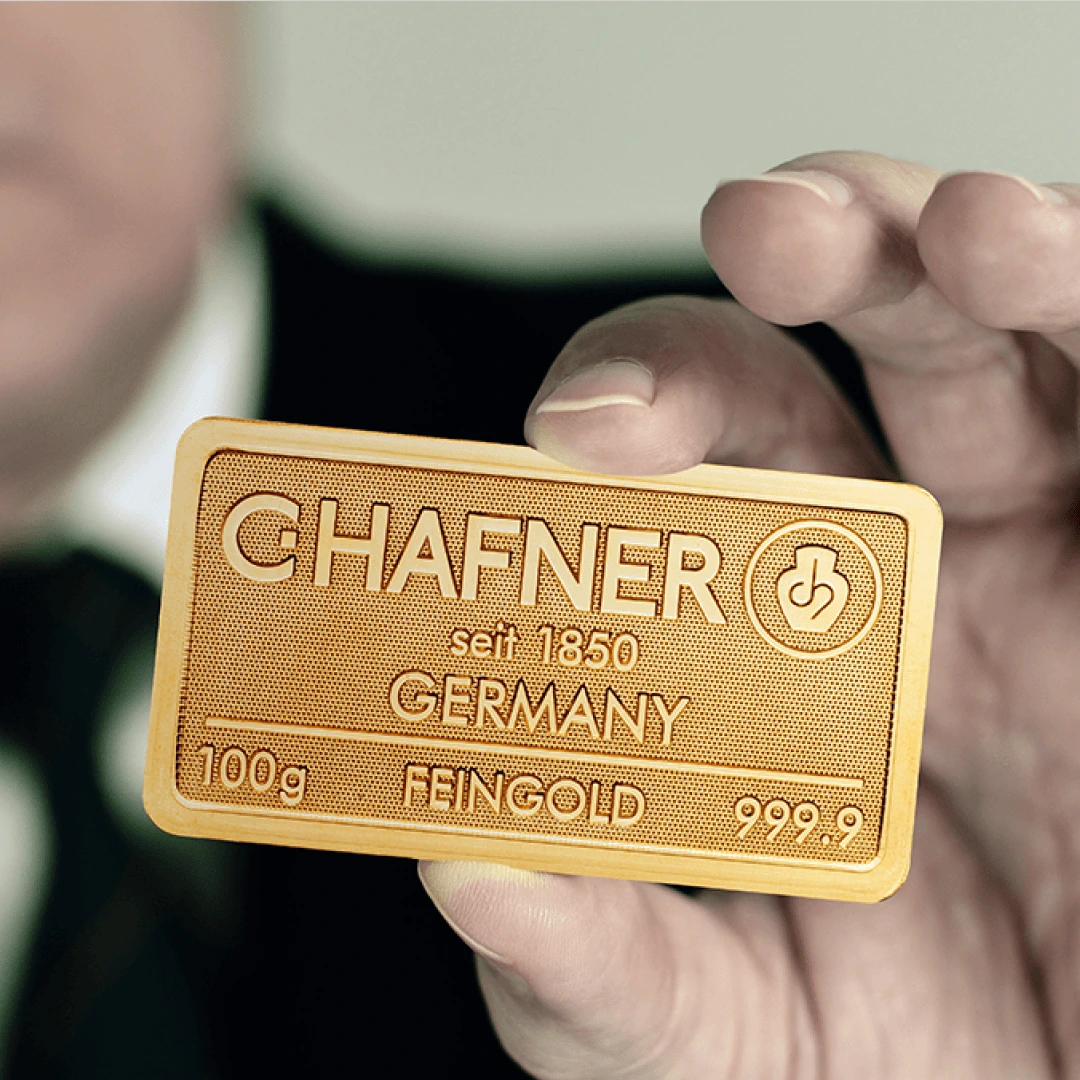
At Banco Carregosa, we handle the purchase, sale, safekeeping, and withdrawal of gold bars produced by C-Hafner, Germany’s oldest family-run refiner. These bars are the purest available on the market at 999.9 parts per thousand (24 carats) and come in sealed wrappers with a unique serial number.
4. Choose a reputable intermediary
This is one of the most important steps in the entire process. Purchases should be made through reputable financial institutions or specialist firms, which provide transparent pricing, clear information on premiums and commissions, and formal guarantees of authenticity.
Avoid informal or undocumented transactions. When it comes to high-value physical assets, traceability and trust in the seller are critical factors in protecting your investment.
5. Analyse the tax regime
The way in which investment gold is taxed may vary depending on the jurisdiction and the nature of the transaction. In Portugal, gold bars with a purity of 995 or above (such as those of 999.9 parts per thousand) are exempt from VAT, except for those weighing one gram or less.
This regime, which was established by Decree-Law No. 362/99 of 16 September, applies to "investment gold” and is distinct from other precious metals, the high level of purity required for tax exemption.
In principle, the occasional sale of physical gold by private individuals is not subject to personal income tax, provided that these sales are not so regular or frequent as to constitute organised commercial activity. However, due to the complexity of tax rules, it is advisable to check the current tax framework before carrying out any significant transactions.
6. Choose a storage solution
As a physical asset, gold requires suitable storage. The most common options are bank vaults, specialist custody services, and self-storage facilities with robust security systems.
The costs and levels of protection associated with each option differ. Investors should consider the annual cost, level of security and accessibility, and insurance cover.
For your convenience, Banco Carregosa handles the purchase, sale, safekeeping, and withdrawal of gold bars. Further information is available on request here.
7. Plan your exit strategy
Although investing begins with a purchase, it should end with a clear plan for selling. Before buying gold bars, you should consider how and where you might sell them in the future, the criteria that will be used to value them, and how their weight might affect liquidity.
Having a defined strategy helps you to avoid making hasty decisions during periods of volatility or when there is an urgent need for liquidity. This reinforces consistency in your investments over time.
Leading gold bar brands
If you are buying gold bars for investment purposes, it is important to consider the brand of the refiner. Bars produced by internationally recognised refiners are easier to sell and more reliable. They also typically have greater liquidity in the market. These companies adhere to strict quality standards, with many being members of the LBMA (London Bullion Market Association), which sets the global standard for precious metals.
C-Hafner
Founded 175 years ago, C-Hafner is Germany’s oldest family-run refinery and a world leader in the refining and recycling of precious metals. It is a trusted brand used by Banco Carregosa, which offers trading and complementary services. Its bars boast the highest purity on the market at 999.9 parts per thousand and are individually sealed with a unique serial number. This guarantees total authenticity and traceability, which, when combined with the brand’s reputation, makes this a solid choice for investors who prioritise rigour and liquidity.
Find out more in our Gold Bars Brochure. Request your copy here.
PAMP Suisse
Founded in 1977, PAMP (Produits Artistiques Métaux Précieux) is a Swiss refinery and one of the world’s most recognised gold brands. Its bars are renowned for their Lady Fortuna design, which is a well-known symbol in the investment gold market. PAMP gold bars are 999.9 parts per thousand pure and are individually certified. They are widely accepted by banks, investors, and precious metals dealers.
Valcambi
Valcambi is another Swiss refinery that enjoys an excellent international reputation. Established in 1961, it produces highly precise gold bars with a purity of 999.9 parts per thousand. One of its most well-known features is the CombiBar, which enables larger bars to be divided into smaller units. Valcambi bars are highly sought after by investors due to their global liquidity.
Heraeus
Heraeus, a German refinery, is one of the oldest and most respected in the sector, with origins dating back to the 19th century. The brand's gold bars are recognised for their quality, traceability, and high purity. The brand is widely traded across Europe and is included on the LBMA’s Good Delivery List, which means that it meets the highest international standards.
Metalor
Another major player in the precious metals market is Metalor, which is also based in Switzerland. Metalor bars are renowned for their consistency and 999.9 fineness, as well as their popularity in international markets.
Perth Mint
The Perth Mint in Australia is one of the world's most renowned government-owned refineries. Established in 1899, the company produces gold bars and coins with a purity of at least 999.9 parts per thousand. These bars are immensely popular among global investors and are widely recognised thanks to the Australian government’s official guarantee.
How to sell gold bars
Although selling gold bars is a straightforward process, you should take care to ensure you receive a fair price. The first step is to monitor the spot price of gold. This figure is constantly changing and is used as a benchmark for transactions. Professional buyers typically pay slightly below the market price since they need to cover resale costs and trading margins. You can secure a better quote by comparing various offers from jewellers, specialist precious metals dealers, and investment platforms.
Another key aspect is choosing a reliable buyer. Companies that specialise in investment gold typically offer transparent valuations, prompt payment, and prices that are in line with the international market. The process is often straightforward. It involves checking the bar, confirming its weight and purity, and then transferring the funds to your account.
Finally, bear in mind that the timing of the sale can have a significant impact on the outcome. As the price of gold fluctuates daily, it is important to track market trends and sell during periods when the value is higher to maximise your return on investment. For this reason, many investors monitor the price of gold over time before deciding whether to sell their bars.
Alternatives to buying gold bars
In addition to buying physical gold bars, there are other ways to invest in gold. Each option has its own unique characteristics and suits different investor profiles.
1. Investment funds
Depending on the fund manager's strategy, you may be able to access securities within the 'gold universe', including mining companies and firms involved in other precious metals. This is a way of getting exposure to gold while also potentially receiving a regular income from any dividends the fund may pay.
Ideal for: investors seeking exposure to gold without having to buy and store it physically.
2. Gold-based exchange-traded funds (ETFs)
ETFs are a practical and accessible way to invest in gold. These funds track the price of gold or a related index without you needing to own it physically. As ETFs can be bought and sold like shares, they are highly liquid.
Furthermore, the minimum investment required may be as little as the price of one unit of the ETF. Another advantage is the lower associated cost, which is generally lower than the cost of buying physical gold or shares in mining companies.
Ideal for: those looking for a practical and accessible way to invest in gold, with liquidity.
3. Shares in mining companies
Investing in the shares of companies involved in gold mining and production is a way of gaining indirect exposure to this precious metal. These companies may offer returns in the form of dividends, particularly if they are well managed and have a policy of distributing profits.
However, this type of investment carries risks. In addition to price fluctuations in gold, returns may be affected by company-specific factors, such as management, operational efficiency, and mine conditions. Investing in mining company shares therefore requires a careful analysis of the companies involved.
Ideal for: this is recommended for investors seeking exposure to gold, who are comfortable with the volatility and risks associated with corporate performance and the mining industry, and who are looking for additional returns through dividends.
4. Gold futures and options
Gold futures and options are a way for more experienced investors to capitalise on future price changes in gold.
However, they are best suited to experienced investors with a good understanding of the market and a high appetite for risk, given that price fluctuations can be rapid and substantial.
Ideal for: this is recommended for experienced investors with a high risk profile who are comfortable with speculation and the prospect of substantial gains or losses over a short period.
5. Forex (XAU/USD or XAU/EUR)
In the Forex market, gold is traded as a financial asset alongside currencies. The most common pairs are XAU/USD and XAU/EUR.
In this case, the investor does not buy physical gold. Instead, they speculate on changes in the gold price relative to a currency, usually via trading platforms such as GoBulling Pro. These platforms allow you to open buy positions (going long) when you expect the gold price to rise or sell positions (going short) when you expect it to fall. In other words, gains (or losses) can be made in both scenarios, regardless of whether the price of gold rises or falls.
Another feature of Forex is leverage, which enables you to control positions worth more than your initial investment. While this can amplify potential gains, it can also lead to rapid losses, particularly during periods of high market volatility.
Ideal for: This is recommended for experienced investors who understand how leverage, volatility, and the dynamics of the foreign exchange market work. Investors should also be comfortable with the possibility of significant short-term gains and losses.
Buying gold bars with Banco Carregosa
For those seeking diversification and exposure to an asset historically associated with preserving value, buying gold bars can be a relevant strategy. However, this approach requires knowledge and analysis of costs, as well as a comprehensive view of the investment portfolio.
At Banco Carregosa, you can incorporate the purchase of gold bars into a wider wealth management strategy, with the support of specialists and access to a variety of investment solutions.
Why buy with us?
• Credibility: C-Hafner gold bars from Germany’s oldest family-run refinery. These bars have the highest purity grade (999.9) and are packaged in sealed wrappers bearing a unique serial number;
• Convenience: for your convenience, Banco Carregosa oversees the purchase, sale, storage, and withdrawal of precious metals, including gold bars;
• Diversification: the introduction of a new asset class that boasts universal and timeless value, while displaying a weak or negative correlation to other assets on the market;
• Personalisation: We offer twelve types of gold bars that are accepted on the international market. These are available in nine different weights, from 2 g to 500 g, and can be either minted or cast.
Protect your assets with investment-grade gold (999.9 fineness). Find out more and purchase C-Hafner bars, which are backed by Banco Carregosa’s liquidity and security guarantee.
Buying gold bars: FAQs
You can find the answers to the most frequently asked questions about buying gold bars here.
Is buying gold bars a good investment?
Whether or not this is a good idea depends on your objectives and risk profile. While buying gold bars can be a useful way to diversify and protect your assets, it is not a substitute for a balanced portfolio.
How much does it cost to buy gold bars?
The price depends on the international gold price, the weight of the bar, and the broker’s premium.
Where can I store gold bars securely?
The most common options are bank safes, specialist custody services, or storing them yourself, provided you take appropriate security measures.
Is it easy to sell gold bars?
Gold is generally in high demand around the world. However, its liquidity depends on its authenticity and certification, as well as the intermediary chosen for the sale.